What is the buyback of shares?

Buyback means that a company repurchases its shares it's called a buyback. It is also known as the buyback of shares and stock buyback. After repurchasing shares company should cancel this because a company can't buy its own shares for the purpose of investment.

Reasons For Buyback Of Shares

When a company sells its share so why do they want to repurchase, so for this there are many reasons for share buyback.

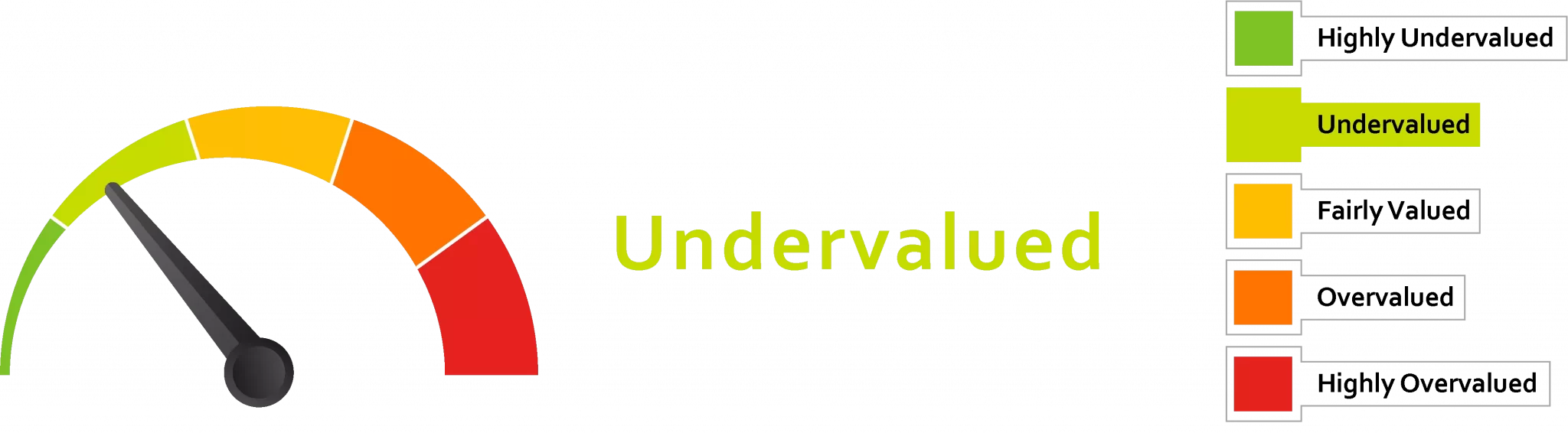
When Shares Are Undervalued

This is the main reason to repurchase shares when a company sees that its company shares are undervalued, so that company buys its own shares. Because of this company shares reduce in the market and price rises day by day.

Excess Cash With Few Investment Options

This is the second main reason for buyback of shares, that company has lots of cash or cash in the bank account is very expensive so for this company repurchase its own shares, and use its cash to give rewards of its shareholder.

Improve Key Financial Ratios

Buyback and repurchase improve company EPS and ROE. when EPS goes up, the stock price is also going up. So that why a company buyback its share because of this stocks and share reduce in the market and values of the shares goes up.

4. A company can buy back no more than 25% of its paid-up equity capital in a financial year.
5. The debt-equity ratio, a key part of stock market fundamentals, must not fall below 2:1 after the buyback.
6. All shares and securities must be fully paid up.
7. Listed companies must follow SEBI guidelines. Other companies must follow prescribed rules.
8. Only one buyback is allowed per year.
9. Shares must be physically destroyed within 7 days of the buyback.
10. No fresh issue is allowed within 6 months of a buyback, except for bonus shares, ESOPs, sweat equity, or conversion of debt or preference shares into equity.

SEBI GUIDELINES FOR BUYBACK

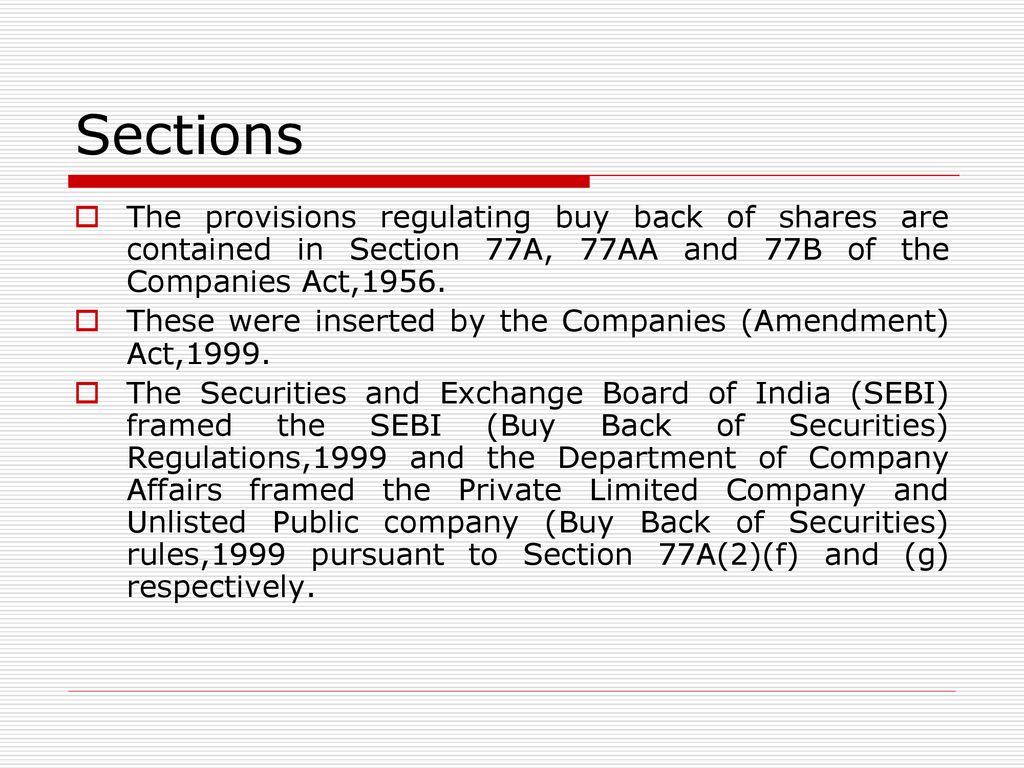
Buyback of shares in India is a relatively new concept that has started to gain popularity in recent years. The buyback of shares is regulated by SEBI (Buyback of Securities) Regulations 1998, which lays out the guidelines for the buyback process. These regulations were recently replaced by SEBI (Buyback of Securities) Regulations, 2018.
In this article, we will discuss the meaning of buyback of shares, reasons for buybacks, methods of buybacks, benefits of buybacks, and more.

1. Buyback of shares must be authorized by its articles
2. A special resolution passed at a general meeting is needed to authorize buy-back. However,
The board of directors may authorize the company to buy back up to 10% of the total paid-up equity capital and free reserves (only one such buy-back can be done in a year) by passing a resolution at its meeting.
3. The maximum amount of buy-back should not exceed 25% of the company's total paid-up capital and free reserves.

Advantages of Share Buyback

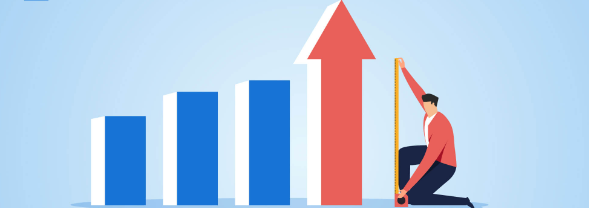
  • Buybacks increase share value in the market.
  • Companies return surplus cash to shareholders.
  • Buybacks improve earnings per share (EPS), return on equity (ROE), and price-to-earnings (P/E) ratios.
  • They help protect companies from unfriendly takeovers.
  • Buybacks put free reserves to good use.
  • Share buybacks can offer tax advantages.

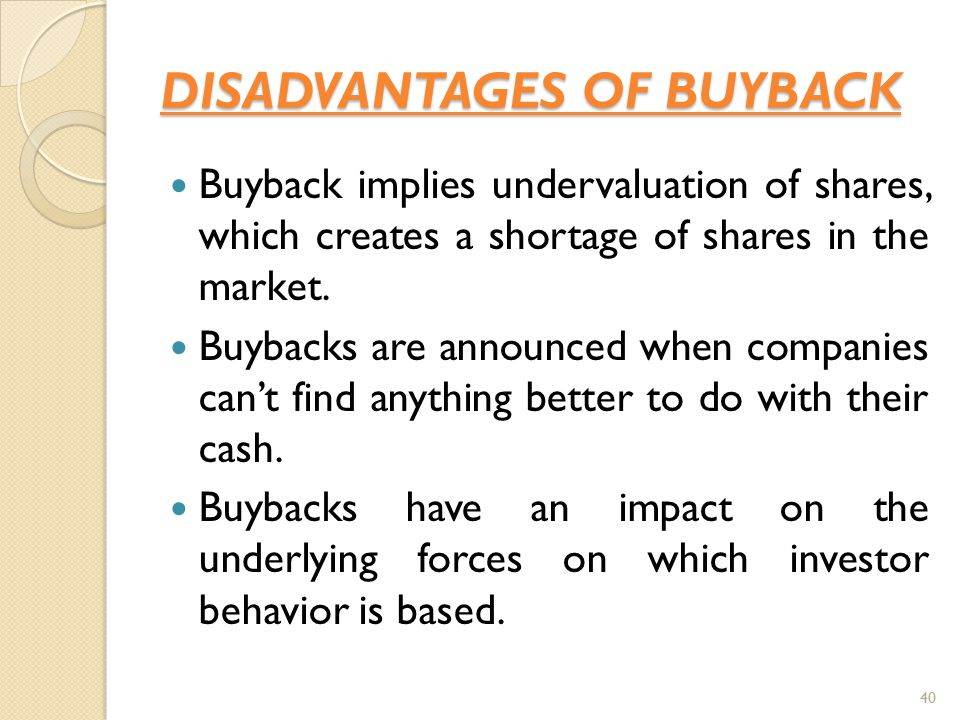
Disadvantages of Share Buyback

  • Buybacks can put companies at financial risk.
  • Companies may overpay for their own shares.
  • Buybacks can send negative signals to investors.
  • Buybacks reduce a company’s cash reserves.
  • Less cash is available for future expansion.
  • Some shareholders may not support the buyback.


METHOD OF BUYBACK

There are three main methods of buy back shares.

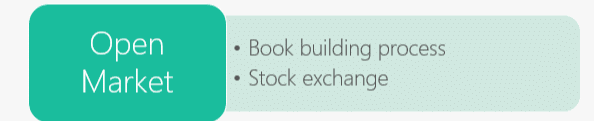
BUYBACK THROUGH OPEN MARKET

In this method of share buyback, the company buys its own stocks from the market. This transaction happens through the company’s brokers. This repurchase program happens for an extended period of time as a large block of shares needs to be bought. The company is under no obligation to conduct the repurchase program after the announcement.
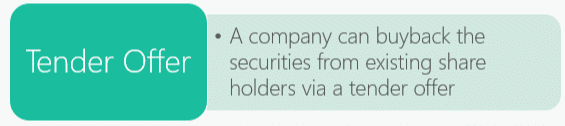
BUYBACK THROUGH TENDER OFFER

A tender offer is when a company buys back its shares from existing shareholders at a fixed price, on a proportionate basis, within a set period of time. The company will issue a letter of offer and tender form to all eligible shareholders who are registered on the company records.
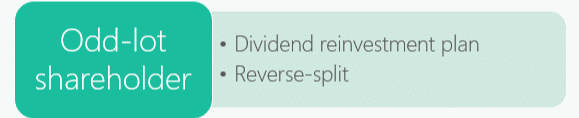
ODD-LOT HOLDERS

With buybacks from odd-lot holders, the company purchases shares directly from the shareholders who own odd lots - which is less common in India. An odd lot holder is a shareholder who owns shares that are fewer than the specified marketable lots as set by the stock exchange.

IMPACT OF SHARE BUYBACK

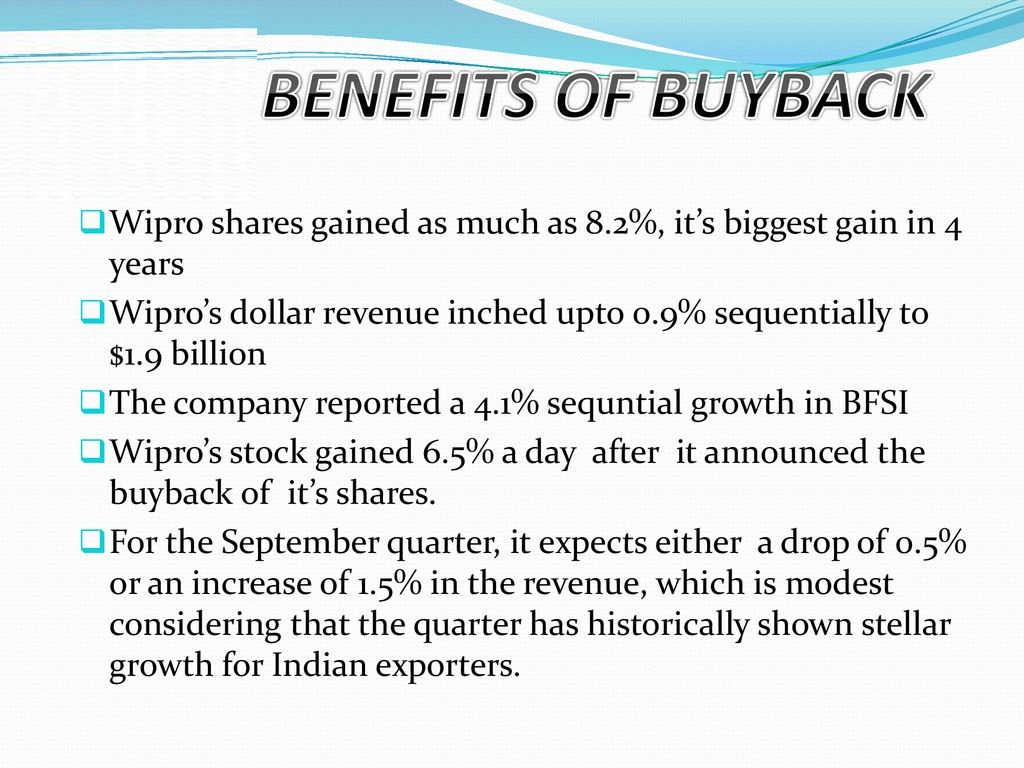
  • Share buybacks generally have a positive impact on a company’s finances.
  • Buybacks often lead to higher share prices.
  • With fewer shares in the market, earnings per share (EPS) increase.
  • Buybacks can also have a positive impact on investor portfolios.
  • Key financial ratios improve after a buyback.
best bank nifty option tips provider in india

Free Registration for Stock Market Tips ( Advisory Services)

As per the SEBI rules, we will provide our Services only to those clients who have Complete Risk Profile. Fill This Registration Form  and 
Contact us on

  • Whatsapp @ +91 95999 69624
  • Call Us @ +91 9650 890 321 
    for  further process.

Risk Profiling is COMPULSORY

Scroll to Top