What Are Macroeconomic And Market-Specific Risks

What Are Macroeconomic and Market-Specific Risks?

Macro and Market RisksMacroeconomic and market-specific risks can affect how businesses and investments perform. Understanding these risks helps you make smarter financial choices. A comprehensive risk assessment is key to protecting your money. 📈


What Are Macroeconomic Risks?

Macro Risks

Macro risks are factors that affect the whole economy or a large part of it. These include inflation, interest rates, exchange rates, and political instability. To assess macro risks, look at economic conditions both at home and around the world. This helps you see how they might impact businesses and markets. 🌍

Example:

A sudden rise in interest rates can hurt a company that depends heavily on loans. This is a common example of a macro risk.

What Are Market-Specific Risks?

Specific risk

Market-specific risks are factors that affect one industry, sector, or company. These can include shifts in what customers want, new technology, changes in laws, and pressure from competitors. To spot these risks, you need to know the details of that specific market or industry. 📊

Example:

New rules in the pharmaceutical industry can change how medicines are priced and sold. This is one example of a market-specific risk.

How to Measure Macroeconomic and Market Risks

To assess macroeconomic and market-specific risks, you need to measure their possible impact. This means using financial models and data tools to estimate how likely bad events are and how much they could cost. 📉

Example:

A Value at Risk (VaR) model can show how much money you might lose if a foreign currency drops in value.

How Scenario Analysis Helps You Prepare
Scenario Analysis

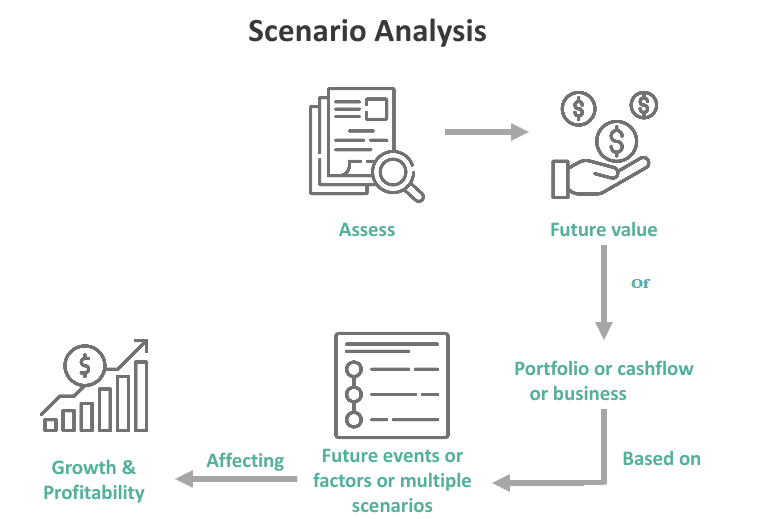
Scenario analysis is a useful way to study macro and market-specific risks. By looking at different economic and market situations, you can see how different risks might affect investments and business results. 📊

Example:

A company can run a scenario to see how a global trade war might affect its sales and profits across different countries.

Ways to Manage Macroeconomic and Market Risks

Risk Mitigation Strategies

Once you find and measure macro and market-specific risks, you need a plan. Good risk management strategies include spreading out your investments, hedging against specific risks, and making backup plans for tough times. 🛡️

Example:

Currency hedging can help protect against losses from exchange rate changes on international investments and trade.

Understanding macroeconomic and market-specific risks takes knowledge of economics, financial models, and how industries work. By carefully studying and measuring these risks, businesses and investors can make better choices in a changing financial world. 📊

best bank nifty option tips provider in india

Free Registration for Stock Market Tips ( Advisory Services)

As per the SEBI rules, we will provide our Services only to those clients who have Complete Risk Profile. Fill This Registration Form  and 
Contact us on

  • Whatsapp @ +91 95999 69624
  • Call Us @ +91 9650 890 321 
    for  further process.

Risk Profiling is COMPULSORY

Understanding the Impact of Macroeconomic and Market-Specific Risks

Macroeconomic and market-specific risks are two fundamental categories of investment risk that can affect portfolio returns. Macroeconomic risks stem from broad economic forces such as inflation, interest rate changes, and geopolitical events that impact entire economies. Market-specific risks arise from conditions unique to a particular industry, sector, or company, including regulatory shifts, technological disruption, and competitive dynamics. Recognizing both types of risk allows investors to build strategies that better withstand market uncertainty.

What Is the Difference Between Macroeconomic Risk and Market-Specific Risk?

Macroeconomic risk affects the entire economy or large segments of it, driven by factors like central bank policy, currency fluctuations, and economic growth data. Market-specific risk is confined to a particular industry or company, such as a new regulation targeting one sector or a product recall by a single business. Diversification across different asset classes and geographies can reduce market-specific risk but does not fully eliminate macroeconomic risk.

How Do Macroeconomic Risks Impact Stock Prices?

Changes in interest rates, inflation, and economic growth directly influence corporate earnings and investor sentiment. Rising interest rates increase borrowing costs for companies and reduce the present value of future cash flows, often leading to lower stock valuations. Inflation erodes purchasing power and can compress profit margins when companies cannot pass higher costs on to consumers.

How Do Market-Specific Risks Affect Individual Companies?

Market-specific risks include technological disruption, new regulations, supply chain disruptions, and changing consumer demand within a single industry. A company that depends heavily on one product or geographic market faces greater exposure to these risks than a more diversified business. Portfolio diversification across multiple sectors is the primary tool for managing market-specific risk.

What is the difference between macroeconomic and market-specific risks?
Macroeconomic risks affect entire economies or broad markets, while market-specific risks are limited to a particular industry, sector, or individual company.
Can diversification eliminate macroeconomic risk?
No, diversification reduces market-specific risk but does not protect against macroeconomic risks that can affect all asset classes at the same time.
What are common examples of macroeconomic risks?
Common examples include changes in interest rates, inflation, currency exchange rates, and geopolitical instability that affect broad economic conditions.
What are common examples of market-specific risks?
Examples include new industry regulations, technological disruption, supply chain issues, and shifts in consumer preferences within a specific sector.
How do investors measure macroeconomic risk?
Investors track indicators such as GDP growth rates, inflation data, central bank interest rate decisions, and purchasing managers' index reports to gauge macroeconomic conditions.
Should investors focus more on macroeconomic or market-specific risks?
Both are essential to consider. Macroeconomic risk sets the broad environment for all investments, while market-specific risk explains performance differences between sectors and individual companies.
Scroll to Top