
What Are Financial And Business Risks In Stock Investments

Understanding Financial and Business Risks in Stock Investments
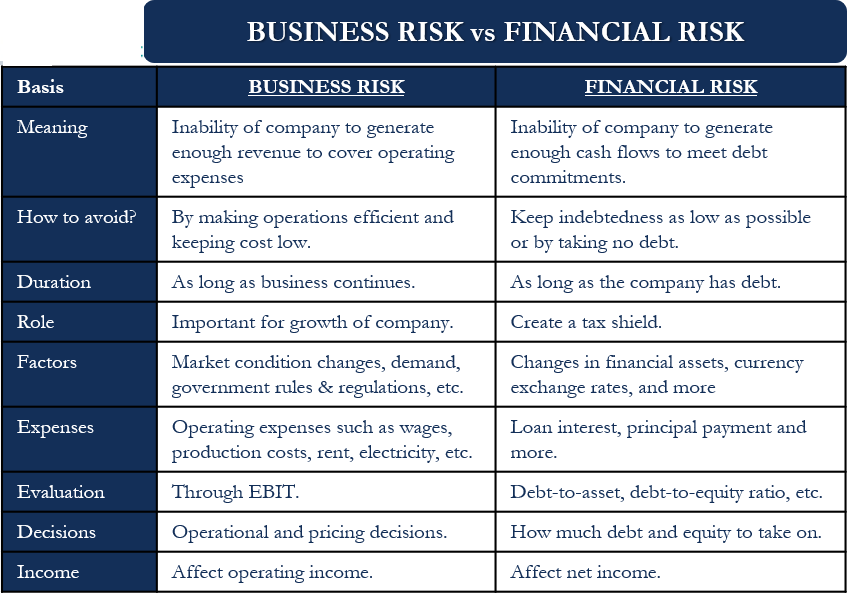
 Financial And Business Risks In Stock Investments

Every stock investment comes with financial and business risks. Knowing how to spot and assess these risks helps you make smarter decisions and protect your portfolio. Learn how to identify risks and assess your portfolio risks before you invest.

1. Types of Financial Risks in the Stock Market
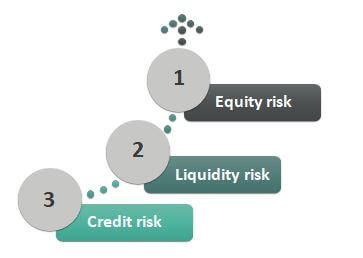
Types of Financial Risks

Financial risks in stock investments come in many forms. The main types include market risk, liquidity risk, credit risk, and operational risk. Market risk is the chance of losing money due to market ups and downs. Liquidity risk is about how easy it is to buy or sell a stock without moving its price too much. Credit risk is the chance that a company may not pay back its debts. Operational risk involves losses from poor internal processes, system failures, or human mistakes. These macroeconomic and market risks can affect your returns in different ways.

Example: 
Market Risk - A sudden drop in the stock market due to world events causes the value of your portfolio to fall.

2. How to Analyze Business Risks in a Company

Analyze Business Risks

Business risks are tied to the specific company you invest in. These risks include industry competition, new regulations, technology changes, and how well the company is run. Understanding these risks helps you judge a company’s long-term growth and staying power. Pay attention to regulatory and geopolitical factors that could affect the business.

Example: 
Regulatory Changes - A drug company faces new rules for its upcoming medicine, which could hurt future sales.

3. Use Financial Ratios to Spot Investment Risk
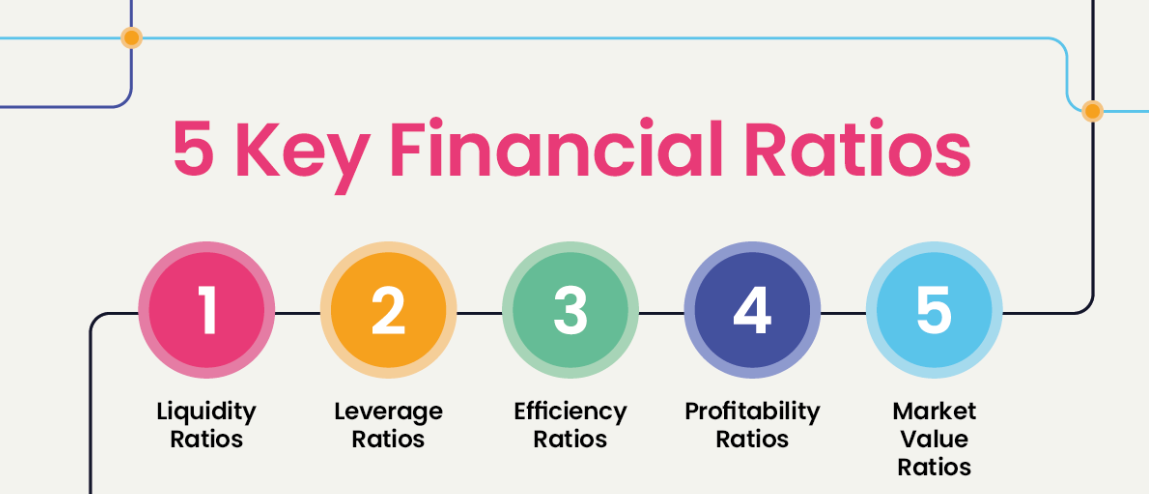
Utilize Financial Ratios and Metrics

Financial ratios like price-to-earnings (P/E), debt-to-equity, return on equity (ROE), and earnings per share (EPS) give you useful clues about a company’s financial health. These metrics help you check a company’s profits, debt levels, and overall stability. They also help you spot potential risks before you invest.

Example: 
Debt-to-Equity Ratio - A high debt-to-equity ratio means a company relies a lot on borrowed money. This can be risky during an economic slowdown.

4. Run Scenario Analysis and Stress Tests
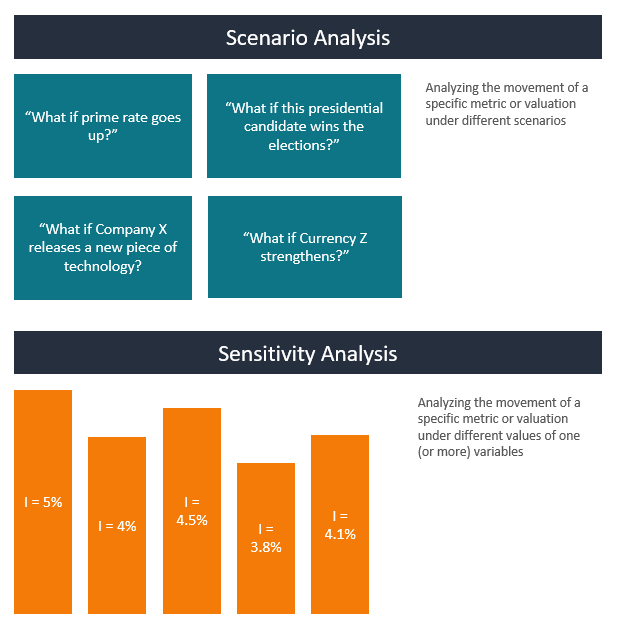
Conduct Scenario Analysis and Stress Testing

Scenario analysis helps you test how different situations might affect your stocks. For example, what happens if interest rates rise or if customer demand drops? Stress testing checks how your portfolio would hold up during a market crash. By running these tests, you can find weak spots in your investments.

Example: 
Scenario Analysis - Test how a sudden rise in material costs would affect a manufacturing company's stock price.

5. Stay Informed and Diversify Your Portfolio

Stay Informed and Diversify

Keep an eye on economic news, industry trends, and company updates. This helps you stay aware of new risks. Also, spread your money across different types of stocks, industries, and regions. Diversifying helps protect your portfolio if one stock or sector takes a hit.

Example: 
Diversification - Invest in different areas like technology, healthcare, and consumer goods. This way, a problem in one industry won't hurt your entire portfolio.

To do: Research and analyze financial and business risks in stock investments.

Short step-by-step plan:

  1. Gather information: Find financial reports, news, and industry analysis about the companies you want to invest in. Example: Use websites like Yahoo Finance, Bloomberg, or Reuters to get financial news and reports.

  2. Identify key risk factors: Watch for risks like market swings, new rules, competition, or company-specific problems. Example: Check how a company’s international sales could be affected by changes in currency values.

  3. Assess risk impact: Think about how each risk could affect the company’s health and stock price. Example: Figure out how a new regulation might cut into a company’s profits.

  4. Compare with industry benchmarks: Compare the risks you found with other companies in the same field. Example: Use financial ratios to see how a company’s debt and cash flow stack up against its rivals.

  5. Develop risk mitigation strategies: Plan ways to lower or manage the risks you found. Example: Spread your investments across different areas, or use hedging strategies to guard against market swings.

  6. Document findings and decisions: Write down your analysis, the risks you found, and your plan to manage them. Example: Make a simple risk report that lists each risk, its impact, and what you plan to do about it.

best bank nifty option tips provider in india

Free Registration for Stock Market Tips ( Advisory Services)

As per the SEBI rules, we will provide our Services only to those clients who have Complete Risk Profile. Fill This Registration Form  and 
Contact us on

  • Whatsapp @ +91 95999 69624
  • Call Us @ +91 9650 890 321 
    for  further process.

Risk Profiling is COMPULSORY

Financial and Business Risks in Stock Investments: Key Concepts Explained

Financial and business risks in stock investments refer to the two broad categories of uncertainty that can affect the value of a stock. Financial risks stem from how a company manages its money, including its debt levels, cash flow, and access to capital. Business risks arise from the company's operations, industry position, competitive environment, and external factors such as regulation or technological change. Investors assess both types of risk together to evaluate whether a stock aligns with their tolerance for potential losses and their return expectations.

What is the difference between financial risk and business risk in stocks?

Financial risk relates to a company's capital structure and its ability to meet debt obligations, while business risk relates to the company's core operations and market environment. A company with high debt has higher financial risk because it must make fixed interest payments regardless of revenue. A company in a highly competitive or regulated industry carries higher business risk because its earnings are more vulnerable to external pressures.

How can investors identify financial risks before buying a stock?

Investors can identify financial risks by reviewing a company's balance sheet, income statement, and cash flow statement. Key indicators include a high debt-to-equity ratio, declining revenue trends, negative free cash flow, and low interest coverage ratios. Comparing these metrics against industry averages helps determine whether the financial risk is within a normal range.

What are the most common business risks that affect stock prices?

The most common business risks include industry competition, regulatory changes, technological disruption, supply chain issues, and shifts in consumer demand. These risks can reduce a company's market share, increase operating costs, or render its products or services less relevant, all of which can negatively affect the stock price.

How do financial ratios help measure investment risk?

Financial ratios provide quantifiable benchmarks for evaluating a company's stability and performance. The debt-to-equity ratio measures leverage, the current ratio measures short-term liquidity, and the return on equity (ROE) measures profitability relative to shareholder equity. Taken together, these ratios give investors a clearer picture of the financial and business risks present in a stock.

Can diversification reduce both financial and business risks?

Diversification reduces the impact of company-specific business risks and some financial risks by spreading investments across different sectors, geographies, and asset types. It cannot eliminate systematic market risk or macroeconomic financial risks, but it lowers the overall volatility of a portfolio by ensuring that a single company's failure does not cause disproportionate losses.

What is financial risk in stock investments?
Financial risk in stock investments is the possibility of losing money because of how a company manages its finances, including its debt load, interest obligations, and access to funding. It is assessed through metrics like the debt-to-equity ratio and interest coverage ratio.
What is business risk in stock investments?
Business risk is the possibility that a company's earnings will decline due to operational factors such as competition, regulation, technological changes, or shifts in customer demand. It is evaluated by analyzing the company's industry position and competitive advantages.
How does market risk differ from company-specific risk?
Market risk affects all stocks broadly, driven by factors like interest rates, inflation, and economic cycles. Company-specific risk affects only a single company or sector and is tied to its unique operations, management decisions, or financial health.
Which financial ratio is most useful for assessing stock risk?
The debt-to-equity ratio is one of the most useful ratios for assessing financial risk because it shows how much a company relies on borrowed money compared to shareholder equity. A ratio above 2.0 often signals higher financial risk, though acceptable levels vary by industry.
Can a company have low business risk but high financial risk?
Yes. A utility company operating in a stable, regulated market may have low business risk due to consistent demand, but high financial risk if it carries substantial debt to fund infrastructure projects. Each type of risk must be evaluated independently.
How often should investors review financial and business risks in their portfolio?
Investors should review financial and business risks at least once per quarter, or whenever a company releases earnings reports or announces major changes such as acquisitions, regulatory actions, or leadership changes.
Scroll to Top