


Different Types of Orders Available with Brokers
When it comes to trading in the stock market, having a good understanding of the different types of orders available is crucial. These orders allow investors to specify the conditions under which their trades will be executed, ensuring that they have control over their investments. One popular brokerage firm that offers a wide range of order types is Zerodha. Today we will explore some of the most common types of orders available with brokers like Zerodha.
What Is a Market Order?
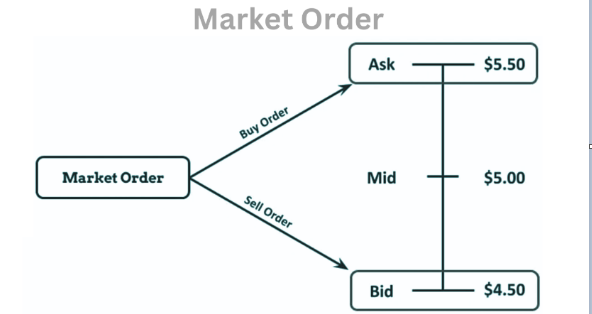
Market Order
A market order is the simplest type of order and is used when you want to buy or sell a security at the best available price in the market. With a market order, your trade will be executed immediately, ensuring that you don’t miss out on any potential opportunities. However, it’s important to note that the execution price may not always be the same as the quoted price due to market fluctuations and common day trading risks.

Limit Order
A limit order allows you to specify the maximum price at which you are willing to buy or the minimum price at which you are willing to sell a security. Unlike a market order, a limit order guarantees the execution price but not the execution itself. This means that your trade will only be executed if the market reaches your specified price.
Stop Loss Order
A stop loss order is designed to limit your losses in case the market moves against your position. With a stop loss order, you specify a trigger price, which, when reached, will automatically convert your order into a market order. This ensures that your trade is executed, but at a potentially different price than your trigger price. Stop loss orders are particularly useful for managing trading risks and protecting your investments.

Stop Loss Limit Order
Similar to a stop loss order, a stop loss limit order also helps manage risk. However, with a stop loss limit order, you have more control over the execution price. In addition to setting a trigger price, you also specify a limit price. If the trigger price is reached, your order becomes a limit order with the specified limit price. This allows you to have more control over the execution price while still protecting your investments.
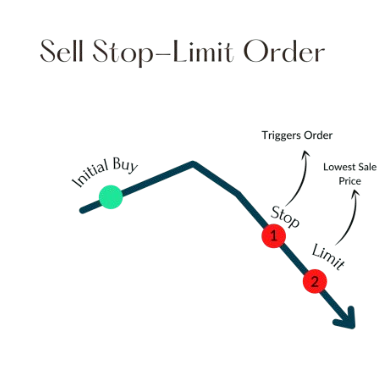
A stop loss limit order combines a stop loss order with a limit order. It is one of the useful intraday stop-loss techniques. You set a trigger price and a limit price. When the trigger price is reached, the order becomes a limit order. It will only fill at the limit price or better.
For example, say you bought a stock at Rs. 100. To limit losses, place a stop loss limit order with a trigger of Rs. 90 and a limit of Rs. 85. If the stock drops to Rs. 90, the order triggers and becomes a limit order to sell at Rs. 85 or higher.
You can also use this order to enter trades. For Bank Nifty options, set the trigger just 0.10 points above your entry level. Here is how:

Determine the desired entry level
When setting stop-loss limits, choose the specific level at which you would like to enter the trade. Let’s say you decide on an entry level of 100 for Bank Nifty options.
Calculate the trigger price
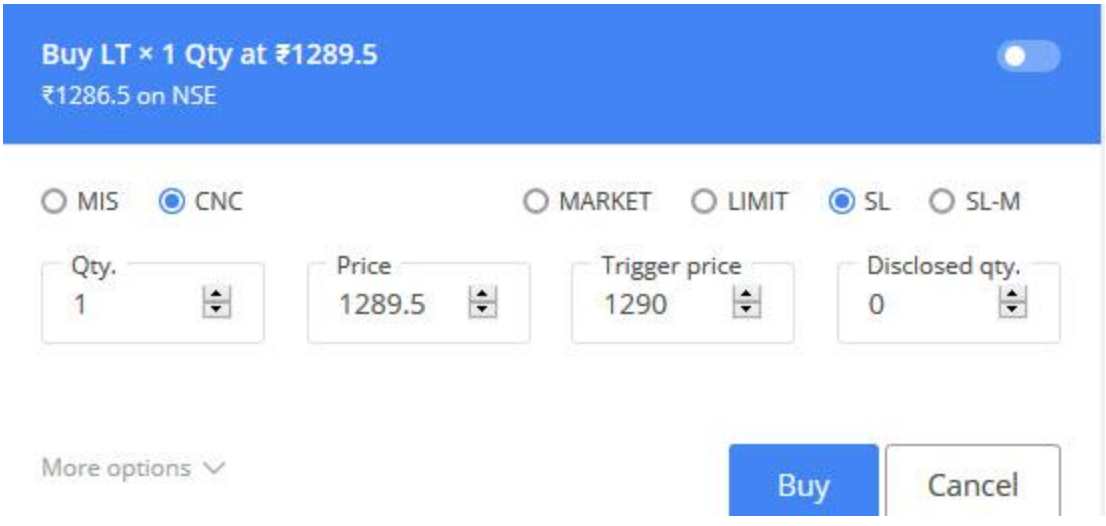
Add 0.10 points to the chosen entry level to calculate the trigger price for your stop loss limit order. In this example, the trigger price would be 100 + 0.10 = 100.10.

Set the limit price
Decide on the limit price, which is the maximum price at which you are willing to execute the trade. This price should be slightly higher than the trigger price to increase the chances of execution. For instance, you might set a limit price of 105.

Place the stop loss limit order
For executing trades on brokerage platforms, access your preferred trading platform provided by your broker, such as Zerodha or Upstox. Locate the option contract for Bank Nifty and select the stop loss limit order option.

Fill In Your Order Details
Input the necessary details, including the symbol (Bank Nifty), order type (stop loss limit), trigger price (100.10), limit price (105), quantity (number of contracts), and any other required parameters or conditions.
Review and submit
Double-check all order details before submitting. Once everything looks correct, submit the stop loss limit order. Example: You want to buy Bank Nifty options when the price crosses 35,000. Set the trigger price at 35,000.10 (entry level plus 0.10) and the limit price at 35,005. The order activates when Bank Nifty hits 35,000.10. It will fill at any price up to 35,005.
Bracket Order
Placing bracket orders combines multiple types of orders into one comprehensive strategy. It consists of three components: the entry order, target order, and stop loss order. With a bracket order, you can set a profit target and a stop loss level simultaneously, ensuring that you have predefined exit points for your trades. This type of order is especially popular among traders who want to automate their trading strategies.

These are some of the most common types of trading orders you can use with brokers like Zerodha, Upstox, or other discount brokers. Each order type has a specific use. Learning how they work can improve your positional trading strategies and overall results. Whether you are new to trading or have experience, knowing these order types helps you trade with more confidence.

Free Registration for Stock Market Tips ( Advisory Services)


As per the SEBI rules, we will provide our Services only to those clients who have Complete Risk Profile. Fill This Registration Form and
Contact us on
- Whatsapp @ +91 95999 69624
- Call Us @ +91 9650 890 321
for further process.
Risk Profiling is COMPULSORY
What Are the Different Types of Trading Orders?
Trading orders are instructions that traders send to a broker specifying how to buy or sell a security. The main types of trading orders available with brokers like Zerodha and Upstox include market orders, limit orders, stop loss orders, stop loss limit orders, and bracket orders. Each order type serves a different purpose, with some prioritizing speed of execution and others prioritizing price control or risk management.
What is a market order and when should you use it?
A market order is an instruction to buy or sell a security immediately at the current best available price. It guarantees execution but not a specific price. Traders use market orders when speed is more important than the exact price, such as entering a fast-moving market or exiting a position quickly.
What is a limit order and how does it work?
A limit order sets a maximum purchase price or a minimum selling price for a security. It guarantees the price but does not guarantee execution. The order fills only when the market reaches the specified price or better, making it useful for traders who want precise entry or exit levels.
What is a stop loss order and how does it protect traders?
A stop loss order triggers a market order when the price reaches a specified trigger level. It is designed to limit potential losses by automatically exiting a position when the market moves against the trader. The execution price after the trigger may differ from the trigger price due to market volatility.
How is a stop loss limit order different from a regular stop loss?
A stop loss limit order combines a stop loss trigger with a limit order. When the trigger price is reached, the order becomes a limit order rather than a market order. This provides price protection after the trigger but carries the risk that the order may not fill if the market moves past the limit price quickly.
What is a bracket order and why do traders use it?
A bracket order combines an entry order with a predefined profit target and a stop loss level. Once the entry order fills, both the target and stop loss orders are placed automatically. Traders use bracket orders to automate trade management and ensure predefined exit points are enforced without constant monitoring.
- What is the difference between a market order and a limit order?
- A market order executes immediately at the best available price, guaranteeing execution but not price. A limit order executes only at a specified price or better, guaranteeing price but not execution.
- When should a trader use a stop loss order?
- A stop loss order should be used when a trader wants to automatically limit losses on a position by exiting if the price moves to a predetermined level, without needing to monitor the market constantly.
- Can a stop loss limit order fail to execute?
- Yes, a stop loss limit order can fail to execute if the market price moves past the limit price before the order fills, especially during fast-moving market conditions or gap openings.
- What happens when a stop loss trigger is hit?
- When a stop loss trigger is hit, the order converts into a market order (for a regular stop loss) or a limit order (for a stop loss limit order). The trade is then placed on the exchange for execution.
- Which order type is best for volatile markets?
- Limit orders and stop loss limit orders are generally better for volatile markets because they provide price protection, though traders must accept that execution may not be guaranteed.
- Can bracket orders be modified after placement?
- Most brokers allow modification of bracket order components such as the target price and stop loss level before any part of the order is triggered, but policies vary by platform.