
Where Candlestick Charts Come From
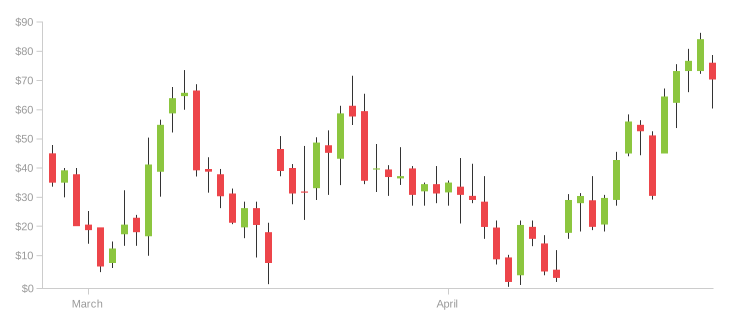
Candlestick charting started in the 18th century. A Japanese rice trader named Munehisa Homma created it. His ideas have been improved over time. Today, they are a key part of the technical analysis fundamentals course used by traders worldwide.
Bullish vs. Bearish Candlestick Patterns

🔥 Bullish Patterns
Bullish candlestick patterns can signal a possible price move upward. Traders watch for these patterns to open buy positions.
📈 Hammer: This pattern has a small body and a long lower wick. It looks like a hammer. It suggests that lower prices were strongly rejected, and a move up may follow.
Example: On March 3, 2020, many traders noticed a hammer pattern on the S&P 500 chart. It signaled the end of a short-term downtrend.\n📈 Inverted Hammer: Similar to the hammer but with the long wick on top. It hints at a possible reversal from a downtrend.
📈 Bullish Engulfing: A small bearish candle is followed by a larger bullish candle that covers the previous one completely. This can suggest a shift in momentum to the upside.
🔻 Bearish Patterns
Bearish patterns can signal a possible price move downward. Traders may use them to sell or close buy positions.
📉 Hanging Man: Appears at the end of an uptrend. It looks like a hammer flipped upside down. It signals that the bulls may be losing control.
Example: The hanging man pattern was spotted on the Bitcoin chart in December 2017. It came before a big drop in price.\n📉 Shooting Star: A bearish pattern with a long upper wick. It shows that higher prices were rejected, hinting at a possible move down.
📉 Bearish Engulfing: A large bearish candle follows a smaller bullish one and covers it completely. This hints at a shift in momentum to the downside.
Two-Candle Patterns and What They Mean

🌟 Bullish and Bearish Harami
The Harami is a two-candle pattern. A small candle is followed by a much larger one. The small candle stays inside the range of the larger one.
- 🌟 Bullish Harami: Suggests the end of a bearish trend.
- 🌟 Bearish Harami: Indicates the possible end of a bullish trend.
🔄 Doji and Its Variations
A Doji is a candle with almost no body. The open and close prices are nearly the same. It shows that the market is unsure which way to go.
- 🔄 Classic Doji: A cross-like pattern that can signal a possible trend reversal or continuation.
- 🔄 Long-Legged Doji: Has longer wicks, which shows even more indecision.
- 🔄 Dragonfly and Gravestone Doji: These look like their names. They can signal bullish and bearish reversals.
How to Practice Reading Candlestick Patterns

🔍 Step-by-Step Guide to Practice
- Choose a Market: Start with a market you know well. Different markets can act in different ways.
- Select a Time Frame: You can spot candlestick patterns on any time frame, from minutes to months.
- Identify the Patterns: Use the descriptions above to find bullish and bearish patterns on the chart.
- Context Matters: Always think about the pattern within the larger market trend.
- Back-Test Your Findings: Look at past data to see how the market reacted after certain patterns formed.
- Paper Trade: Before using real money, practice making trades based on candlestick patterns in a simulated account.
📚 Real-Life Examples
Apple Inc. (AAPL): On January 2, 2019, a bullish engulfing pattern signaled the end of a downtrend. It led to a big rally.
Example: AAPL's chart showed a bearish candle on January 1, followed by a larger bullish candle the next day. The bullish candle covered the prior candle's body.\nGold Futures: A gravestone Doji appeared in August 2020. It signaled a reversal from the uptrend, which was confirmed in the following days.
Why Candlestick Patterns Matter for Traders

Candlestick patterns are a useful tool for traders. They help show market mood and possible price moves. By learning about candlestick patterns, traders can make smarter choices and improve their trading plans. Keep in mind, these patterns are not perfect on their own. It is best to use them along with other technical tools and analysis for better results.
Short step-by-step plan:
Learn the basics of candlestick patterns:
- Research common candlestick patterns such as Doji, Hammer, Shooting Star, and Engulfing Patterns.
- Example: Look at historical price charts of a stock. Find Doji patterns where the open and close prices are almost equal. This shows indecision in the market.
Understand what each pattern means:
- Study what each candlestick pattern could mean for price moves and market mood.
- Example: Look at a Hammer pattern. It may signal a possible reversal in the market after a downtrend.
Practice on historical charts:
- Use online tools or trading platforms to look at past price charts. Practice finding different candlestick patterns.
- Example: Use a trading platform to look at past charts of a cryptocurrency. Find Engulfing Patterns that may signal a trend reversal.
Test yourself with live charts:
- Use what you learned about candlestick patterns on real-time market charts. Practice spotting patterns as they form.
- Example: Watch live stock charts and find Shooting Star patterns to predict possible bearish reversals.