What are the Factors that Affect Option Pricing.

What Affects Option Pricing?
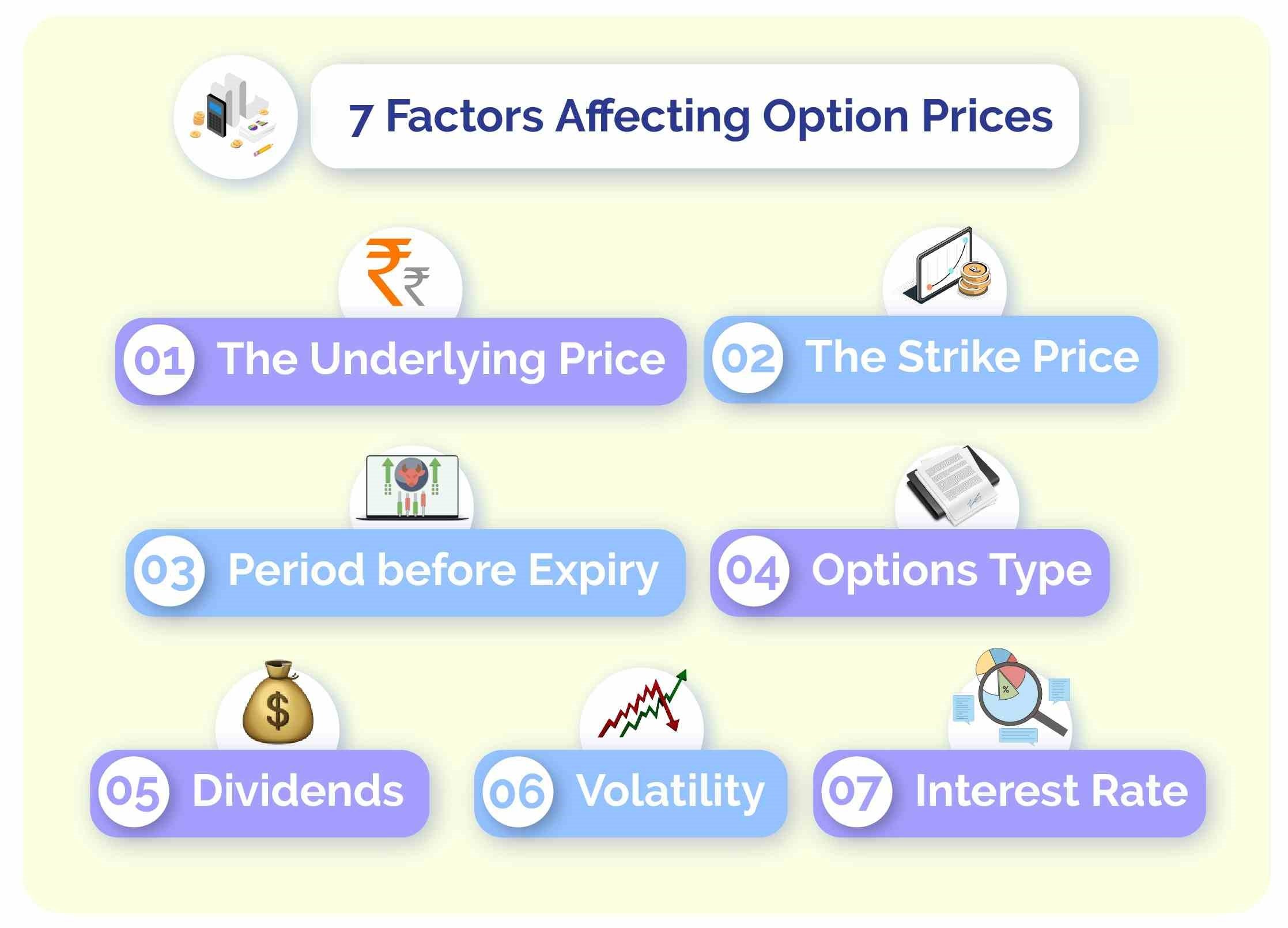
Option pricing depends on six key factors: the stock price, strike price, time to expiration, volatility, interest rates, and dividends. An option is a contract that gives the buyer the right, but not the obligation, to buy or sell an asset at a set price on or before a certain date. Understanding these factors helps you make smarter trading decisions.
The Building Blocks of Option Pricing

📈 Underlying Stock Price
The most direct factor is the current stock price. For a call option, the value goes up when the stock price goes up. For a put option, the value goes up when the stock price goes down.
If stock XYZ is trading at $50, a call option with a strike price of $45 is more valuable than one with a strike price of $55.
💵 Strike Price

The strike price is the price at which the option can be exercised. Options with strike prices close to the current stock price are more sensitive to stock price changes and cost more.
A call option for XYZ with a strike price of $50 is more expensive than one with a strike price of $60 when XYZ is trading at $55.
⏳ Time to Expiration
Options have an expiration date. The more time an option has, the more time it has to become profitable. This leads to a higher price. This is called the time value.
A 6-month call option will cost more than a 1-month call option on the same stock with the same strike price.
📊 Volatility
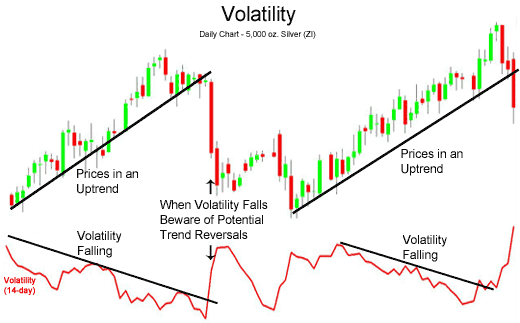
Volatility measures how much the stock price moves up and down. Higher volatility means the stock price could move more, which can help the option holder. That is why volatility impacts pricing. Stocks with big price swings lead to more expensive options.
If stock XYZ has wild price swings, options on XYZ will cost more than options on a stable stock like ABC.
🏦 Interest Rates

Interest rates also play a role, though a smaller one. Higher interest rates can increase the value of call options and decrease the value of put options.
In a high-interest-rate environment, holding cash becomes more attractive. This can increase the value of the right to buy stocks (calls) at today's prices.
💲 Dividends
If a stock is expected to pay dividends, this can reduce the price of call options and raise the price of put options. This is because investors expect the stock price to drop by the amount of the dividend.
If XYZ is expected to pay a $2 dividend, the stock price might drop by that amount. This affects the value of calls and puts.
Real-World Impacts on Option Pricing

Market Events
Events like earnings reports, product launches, or regulatory approvals can cause big price swings in the stock. This affects option prices.
Supply and Demand
The options market runs on supply and demand, just like the stock market. High demand for options can push their price up, even if other factors stay the same.
Understanding the factors that affect option pricing is key to successful options trading. By looking at the stock price, strike price, time to expiration, volatility, interest rates, and dividends, you can make better trading decisions. Options offer leverage and flexibility, but they also carry risks. Manage those risks carefully.
Short step-by-step plan:
- Learn the basics of options trading and how they work in the stock market. Read articles or watch videos that explain the core ideas.
- Study the factors that affect option pricing: stock price, time to expiration, volatility, and interest rates. Look at real examples that show how each factor changes option prices.
- Explore pricing models like the Black-Scholes model. See how they use these factors to calculate option prices. Use online guides or books with clear examples.
- Review real market events where option pricing factors played a big role. Study how news, earnings, or market shifts affected option prices.
- Write down what you learned. Make a simple list of the key factors that affect option pricing and how they work.
Factors Affecting Option Pricing Explained Simply
Option pricing is determined by six key factors: the underlying asset's price, the strike price, time until expiration, implied volatility, risk-free interest rates, and expected dividends. These inputs feed into pricing models such as Black-Scholes to produce a theoretical fair value for any option contract. The price of an option, also called the premium, reflects the probability that the option will finish in the money by expiration.
What are the six main factors that affect option pricing?
The six main factors affecting option pricing are the current price of the underlying stock or asset, the option's strike price, the time remaining until expiration, the implied volatility of the underlying asset, the prevailing risk-free interest rate, and any expected dividends on the underlying stock.
How does implied volatility impact option prices?
Implied volatility (IV) represents the market's forecast of how much the underlying stock price is expected to move in the future. Higher implied volatility leads to higher option premiums because there is a greater chance of large price swings in either direction. IV tends to rise before earnings announcements, product launches, or other major market events.
How does time to expiration affect option premiums?
Time to expiration directly contributes to the time value component of an option's premium. Options with more time until expiration have higher time value because the underlying asset has a longer window to move in a favorable direction. This time value decays as expiration approaches, a phenomenon known as theta decay or time decay.
Why do interest rates affect option pricing?
Risk-free interest rates affect the cost of carrying a position. Higher interest rates increase the value of call options because the present value of the strike price decreases, making it cheaper to defer payment. Conversely, higher rates decrease the value of put options. In practice, interest rate changes have a relatively small effect on most equity options compared to other factors.
What role do dividends play in option pricing?
Expected dividends reduce the price of call options and increase the price of put options. When a stock pays a dividend, its price typically falls by the dividend amount on the ex-dividend date. Since call options benefit from stock price increases and put options benefit from stock price decreases, dividend expectations are factored into the option premium accordingly.
- What is the difference between intrinsic value and time value in options?
- Intrinsic value is the amount an option would be worth if exercised immediately, calculated as the difference between the stock price and the strike price for in-the-money options. Time value is the remaining portion of the premium beyond intrinsic value, representing the potential for the option to gain more value before expiration.
- Which factor has the biggest impact on option prices?
- Implied volatility and the underlying stock price typically have the largest impact on option prices. The stock price determines whether an option is in or out of the money, while implied volatility directly influences how much traders are willing to pay for uncertainty and potential movement.
- Can option pricing factors change for different types of options?
- Yes, the same six factors apply to both call and put options, but they affect each type in opposite directions. For example, an increase in the stock price raises call premiums and lowers put premiums, while an increase in volatility raises premiums for both calls and puts.
- How do supply and demand affect option pricing beyond the six factors?
- Market supply and demand create a gap between the theoretical price from a model and the actual traded price. High demand for a particular option contract can push its premium above fair value, while low demand can cause it to trade at a discount. This is reflected in changes to implied volatility levels across different strike prices and expiration dates.