
How the Head and Shoulders Pattern Signals a Trend Reversal

📈 The Anatomy of a Head and Shoulders Pattern
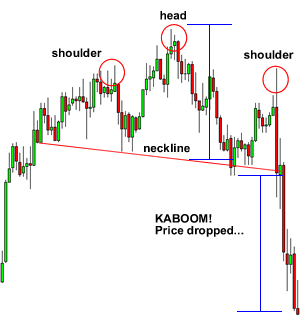
The Head and Shoulders pattern is a chart formation that resembles a baseline with three peaks; the outside two are close in height, and the middle is highest. It is typically formed in an uptrend and signals that the asset’s price is set to fall. The opposite is the inverse head and shoulders, which forms during a downtrend and signals a potential upward move.
Left Shoulder: Occurs during the uptrend, prices peak and then fall to a new support level.
Head: After reaching the new support, prices rise again forming a higher peak before falling back to the support level.
Right Shoulder: Prices rise for the last time but not as high as the head before falling back to the support, completing the pattern.
🔍 Identifying the Pattern in Real-Time
Uptrend Recognition: Spot an existing uptrend. The head and shoulders pattern does not form in a downtrend.
Peak Formation: Watch for a peak to form and then retrace back to a support level, forming the left shoulder.
New High: Look for the price to reach a higher peak before falling back to the support level, creating the head.
Lower High Formation: Identify a third peak that does not surpass the height of the head, forming the right shoulder.
Neckline: Draw a line connecting the low points of the two troughs from the left shoulder and head. This is the neckline, a critical support level.
📊 Example of a Head and Shoulders Pattern
Left Shoulder: Stock X rises to $50, retraces to $40.\nHead: Stock X ascends to $60, declines back to $40.\nRight Shoulder: Stock X climbs to $55, then falls to $40.\nNeckline: A straight line drawn at the $40 support level.\nHow to Confirm the Head and Shoulders Pattern
Volume: Ideally, volume should decrease as the pattern forms, with the right shoulder having less volume than the left.
Neckline Break: A decisive close below the neckline confirms the pattern.
Price Target: After the breakout, the price target is typically the distance from the head’s peak to the neckline projected downward.
📉 The Head and Shoulders Pattern in Market History
Before major market downturns, many stocks have formed the head and shoulders pattern. During the early 2000s tech downturn, several companies showed this classic reversal formation. After the right shoulder formed and the price broke below the neckline, stocks dropped significantly.
Similarly, before the 2008 financial crisis, many bank stocks displayed head and shoulders patterns. These formations served as early warning signals for traders who were watching for trend reversals.
🔄 Inverse Head and Shoulders: A Bullish Signal

Just as the traditional head and shoulders pattern signals a bearish reversal, the inverse head and shoulders pattern indicates a bullish reversal during a downtrend.
Formation: It’s the mirror image with the head forming a lower low and the shoulders forming higher lows.
Breakout: A break above the neckline suggests a potential upward price movement.
🛠️ Tools for Practicing Pattern Recognition
Charting Software: Use platforms with drawing tools to manually identify patterns.
Historical Data: Study past charts from periods of market volatility to see how the patterns played out.
Paper Trading: Practice recognizing patterns and making trades without risking real money.
Understanding chart patterns like the head and shoulders can help you anticipate future price movements. For the best results, use this pattern along with other forms of technical analysis. No single pattern works perfectly every time.

Tips for Trading the Head and Shoulders Pattern:
Wait for the right shoulder to finish forming before you make a trade.
Watch for the neckline break. A close below the neckline confirms the pattern.
Check the volume. Lower volume on the right shoulder makes the signal stronger.
Set a price target. Measure from the head down to the neckline. Project that same distance below the neckline.
Use a stop-loss. Place it above the right shoulder to limit your risk.