Use Technical Indicators Such as Moving Averages and RSI to Analyze Market Trends

What Are Moving Averages in Technical Analysis?

Moving averages are one of the most popular tools in technical analysis for stock decisions. They smooth out price data to help traders identify market trends.

📈 The Simple Moving Average (SMA)

The SMA is calculated by taking the arithmetic mean of a given set of prices over a specific number of days in the past, for example, 20, 50, or 200 days.

Example: A 50-day SMA adds up the closing prices of the last 50 days and divides it by 50.

📊 The Exponential Moving Average (EMA)
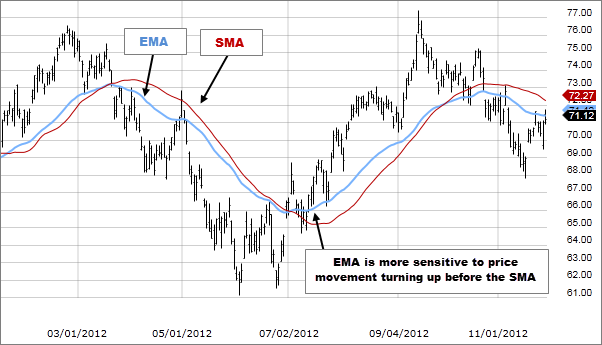
The Exponential Moving Average (EMA)

The EMA gives more weight to recent prices and reacts more quickly to price changes than the SMA.

Example: A 20-day EMA will react more significantly to price movements from the past 20 days than a 20-day SMA.

🔍 Using Moving Averages to Identify Trends

  • Uptrend: If the Banknifty is above its 50-day SMA, it’s often considered to be in an uptrend.
  • Downtrend: If it is below its 50-day SMA, it might be in a downtrend.
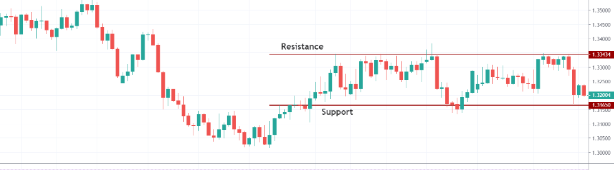
  • Support and Resistance: Moving averages can act as support in an uptrend and resistance in a downtrend.

What Is the Relative Strength Index (RSI)?
Have You Ever Heard of the RSI Rollercoaster?

The Relative Strength Index (RSI) is a momentum oscillator that measures the speed and change of price movements.

💪 The Basics of RSI

RSI oscillates between zero and 100. Traditionally, and according to Wilder, RSI is considered overbought when above 70 and oversold when below 30.

Example: An RSI reading of 80 suggests that the Banknifty may be overbought and due for a pullback.

🔄 RSI Divergences
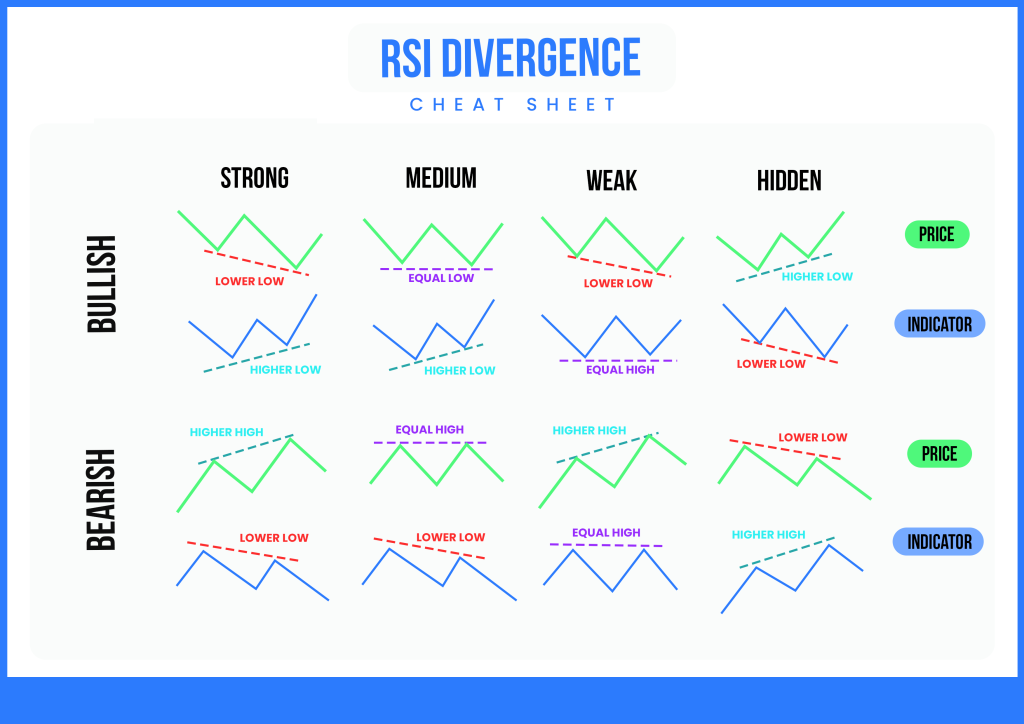
RSI Divergences

  • Bullish Divergence: When the Banknifty makes a new low but the RSI makes a higher low, it could indicate a potential reversal.
  • Bearish Divergence: When the Banknifty makes a new high but the RSI makes a lower high, it could signal a potential downturn.

📉 Using RSI to Confirm Trends

  • Overbought/Oversold: Use RSI to identify potential pullbacks or rallies within a trend.
  • Centerline Crossover: RSI crossing above 50 can signal an uptrend, while a move below 50 can signal a downtrend.

Real Market Examples of Moving Averages and RSI

📚 Case Study: The 200-Day SMA

Traders often watch the 200-day SMA closely. In 2008, when Banknifty broke below its 200-day SMA, it was an early warning of the financial crisis.

📉 Case Study: RSI in Action

In 2016, the Banknifty showed a bullish divergence with the RSI. While Banknifty was reaching lower lows, RSI was making higher lows, indicating weakening downward momentum. This divergence was followed by a significant rally.

How to Use Moving Averages and RSI Together

Using moving averages and RSI can provide a framework for Banknifty options trading analysis. Remember, no indicator is foolproof. They should be used in conjunction with other tools and your own analysis to make informed trading decisions.

Short step-by-step plan:

  1. Understanding Moving Averages:

    • Explain the concept of moving averages, a commonly used technical indicator.
    • Provide an example of how a simple moving average (SMA) can be calculated for Banknifty options trading using the closing prices of the past 10 days.
    • Discuss how moving averages help in identifying trends and support/resistance levels.
  2. Using Relative Strength Index (RSI):

    • Define RSI and its role in technical analysis for Banknifty options trading.
    • Show an example of RSI calculation based on the average gains and losses over a specific period.
    • Explain how RSI values help in determining overbought and oversold conditions in the market.
  3. Interpreting Market Trends:

    • Provide real stories or examples where the use of moving averages and RSI helped in analyzing market trends in Banknifty options trading.
    • Discuss the significance of combining both indicators to validate the trend analysis and make informed trading decisions.
  4. Risk Management and Decision Making:

    • Highlight the importance of understanding technical indicators for risk management in Banknifty options trading.
    • Share a real-life scenario where the application of moving averages and RSI influenced a trader’s decision-making process and the outcome.

Using Technical Indicators to Analyze Market Trends

Technical indicators such as moving averages and the Relative Strength Index (RSI) are quantitative tools that help traders analyze market trends by processing historical price and volume data. Moving averages smooth out price fluctuations to reveal the direction and strength of a trend, while RSI measures the speed and magnitude of price changes to identify overbought or oversold conditions. Together, these technical indicators to analyze market trends provide a structured framework for identifying trend direction, potential reversals, and entry or exit points.

What are the most reliable technical indicators to analyze market trends?

Moving averages and the Relative Strength Index are among the most widely used technical indicators to analyze market trends. Simple Moving Averages (SMA) and Exponential Moving Averages (EMA) help identify trend direction and dynamic support and resistance levels. RSI adds a momentum dimension by measuring whether a market is overbought or oversold relative to recent price action.

How do moving averages help in trend analysis?

Moving averages filter out short-term price noise to reveal the underlying trend. When the price trades above a moving average, it signals an uptrend; when below, it signals a downtrend. Crossovers between shorter-term and longer-term moving averages can also signal trend changes. For example, a 50-day SMA crossing above a 200-day SMA, known as a golden cross, indicates a potential long-term uptrend.

What does the RSI indicator reveal about market trends?

The RSI oscillates between 0 and 100 and provides signals about trend strength and potential reversals. Readings above 70 suggest overbought conditions and a possible trend pause or reversal, while readings below 30 suggest oversold conditions. RSI divergence, which occurs when price and RSI move in opposite directions, can warn that the current trend is losing momentum and may reverse.

How can you combine RSI and moving averages for better trend confirmation?

Using moving averages and RSI together allows traders to filter out false signals. In an uptrend confirmed by price above a moving average, an RSI reading above 70 does not automatically signal a sell, as it may simply indicate strong momentum. Conversely, in a confirmed downtrend, an RSI below 30 can confirm bearish momentum. A bullish RSI divergence while price holds above a key moving average can provide a stronger buy signal than either indicator alone.

What are technical indicators in trading?
Technical indicators are mathematical calculations based on historical price, volume, or open interest data that traders use to forecast market direction and identify trading opportunities.
Which technical indicators are best for analyzing market trends?
Moving averages, the Relative Strength Index (RSI), and the Moving Average Convergence Divergence (MACD) are among the most commonly used technical indicators to analyze market trends and momentum.
How do you interpret a moving average crossover?
A moving average crossover occurs when a shorter-term moving average crosses above or below a longer-term moving average. A crossover above is considered bullish, while a crossover below is considered bearish, signaling a potential trend change.
What is RSI divergence and why does it matter?
RSI divergence happens when the price moves in one direction while the RSI moves in the opposite direction. Bullish divergence suggests weakening downward momentum and a possible reversal upward, while bearish divergence suggests weakening upward momentum and a possible reversal downward.
Can technical indicators guarantee accurate market predictions?
No technical indicator is foolproof. All indicators are based on past data and can produce false signals. They work best when used together with other forms of analysis and proper risk management.
What timeframes work best for moving averages and RSI?
Moving averages and RSI can be applied to any timeframe. Shorter periods, such as 10 to 20 days for moving averages and a 14-period setting for RSI, suit active trading, while longer periods, such as 50 to 200 days, are better for identifying major trends on daily and weekly charts.
Scroll to Top