

Stock Futures Lot Size and Margin: How Much Capital You Really Need
Lot size, contract value, SPAN and exposure margin, and how to plan capital from the loss per lot, with worked numbers.
Key takeaways
- A stock futures lot is a fixed number of shares set by NSE; you cannot trade less than one lot.
- Contract value = price × lot size. Margin is only a part of it, but your gain or loss is on the full value.
- Plan capital from the loss per lot at your stop-loss, not from the margin alone.
- Lot sizes and margins change; check them before every trade.
01What is a lot size in stock futures?
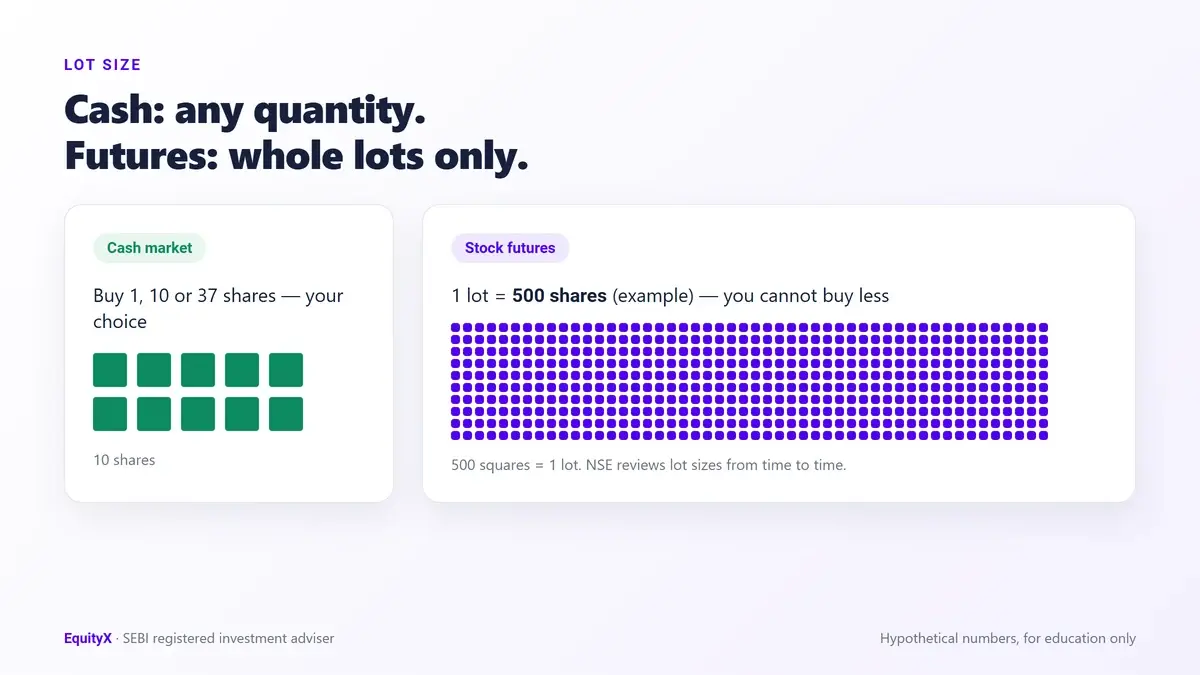
You cannot buy a single share in the futures market. Each stock futures contract has a fixed lot size set by NSE, and you trade in whole lots. The exchange reviews lot sizes from time to time, so the same stock can have a different lot size next quarter.
| Stock (NSE) | Lot size |
|---|---|
| Reliance Industries | 500 |
| HDFC Bank | 650 |
| ICICI Bank | 700 |
| Infosys | 400 |
| State Bank of India | 750 |
| TCS | 225 |
Lot sizes as of 19 Oct 2026, for illustration only; not a recommendation. See the full, current list on our F&O lot size and expiry page.
02Contract value: what one lot is really worth
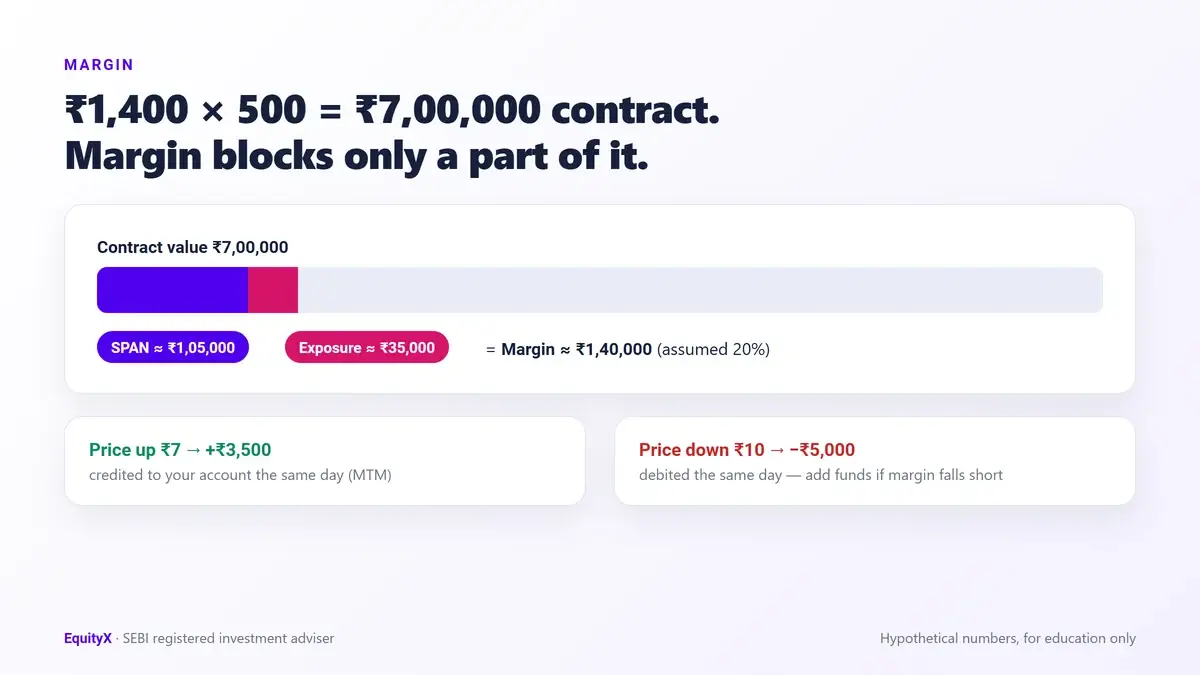
Contract value = futures price × lot size. This is the size of your position, and every rupee move in price changes your result by the lot size.
03Margin for stock futures: SPAN, exposure and MTM
To trade one lot, your broker blocks margin set by the exchange: SPAN margin (for the worst likely one-day move) plus exposure margin. Together they are a percentage of contract value, often 15% to 30%, and higher for volatile stocks.
Futures are marked to market every day: gains are credited and losses are debited. If losses eat into the margin, you must add funds or the broker can square off the position.
Under SEBI’s peak margin rules, brokers collect the full exchange margin upfront, so intraday futures positions no longer get the large extra leverage they once did.
04How much capital do you really need?
Margin tells you the minimum to open a position. Capital should be planned from the loss you can accept at your stop-loss. The table shows the loss on one lot of our hypothetical ₹1,400 stock with lot size 500:
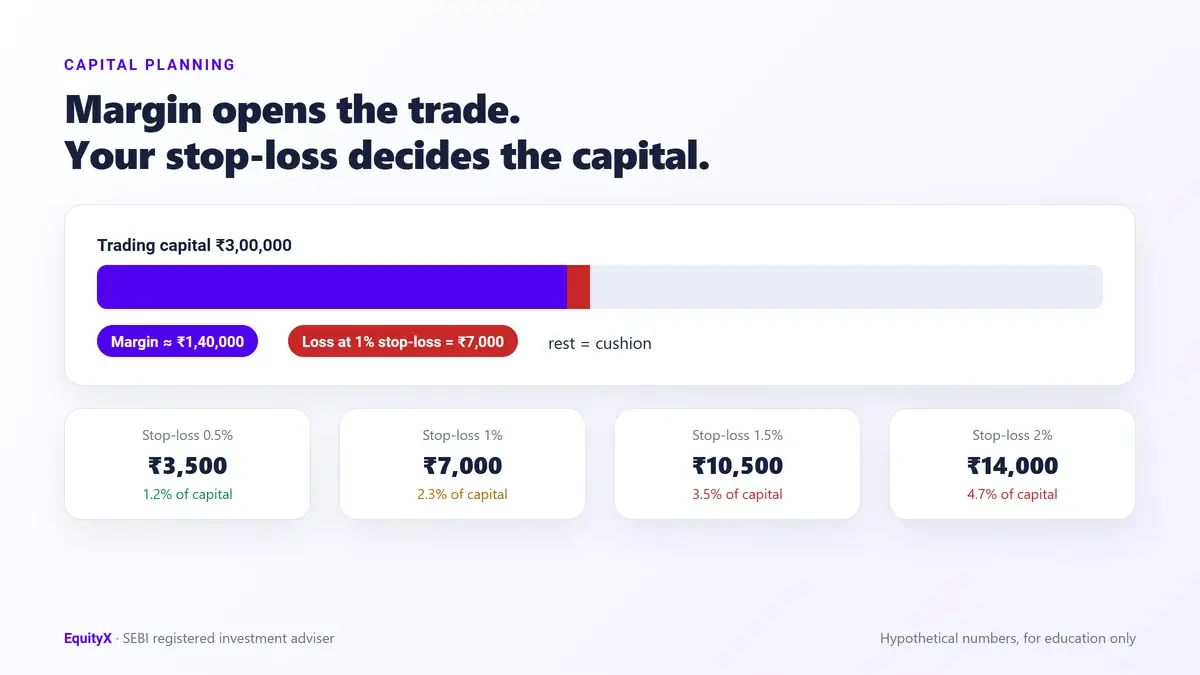
| Stop-loss distance | Points on ₹1,400 | Loss per lot (500) | % of ₹3 lakh capital |
|---|---|---|---|
| 0.5% | ₹7 | ₹3,500 | 1.2% |
| 1.0% | ₹14 | ₹7,000 | 2.3% |
| 1.5% | ₹21 | ₹10,500 | 3.5% |
| 2.0% | ₹28 | ₹14,000 | 4.7% |
With ₹3 lakh, a 1% stop-loss on this contract risks about 2.3% of capital, which is already above a 1% or 2% per-trade rule. That is why futures traders use tighter, well-placed stops, pick lot sizes that fit their capital, and start with one lot. Work out your own numbers with the position size calculator and our intraday risk management guide.
For our stock future tips, we suggest about ₹3 lakh of trading capital and starting with 1 lot, with a stop-loss on every call.
05Stock futures vs intraday cash trading
| Point | Stock futures | Intraday cash |
|---|---|---|
| Minimum quantity | One lot | One share |
| Money needed | Margin on a large contract | Price × quantity (intraday margin varies) |
| Risk per move | High, on full contract value | Lower for small quantities |
| Expiry | Monthly; roll over if carried | None |
| Short selling | Easy | Intraday only |
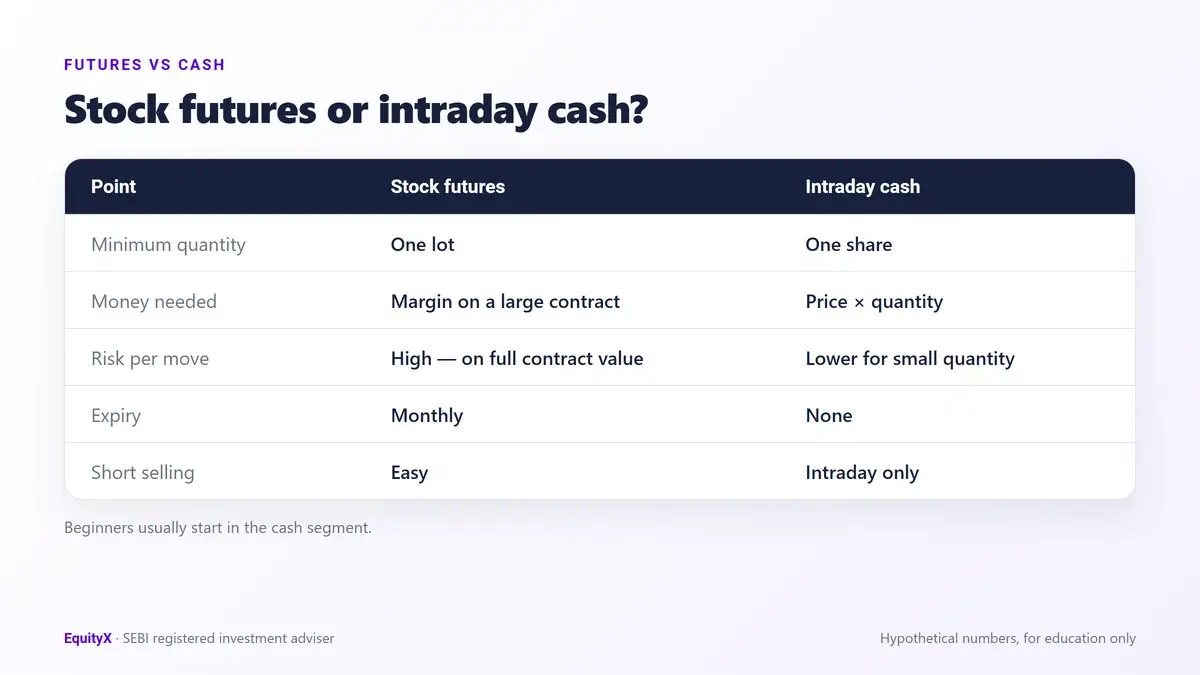
Beginners usually start in the cash segment. See our intraday stock tips for cash market calls.
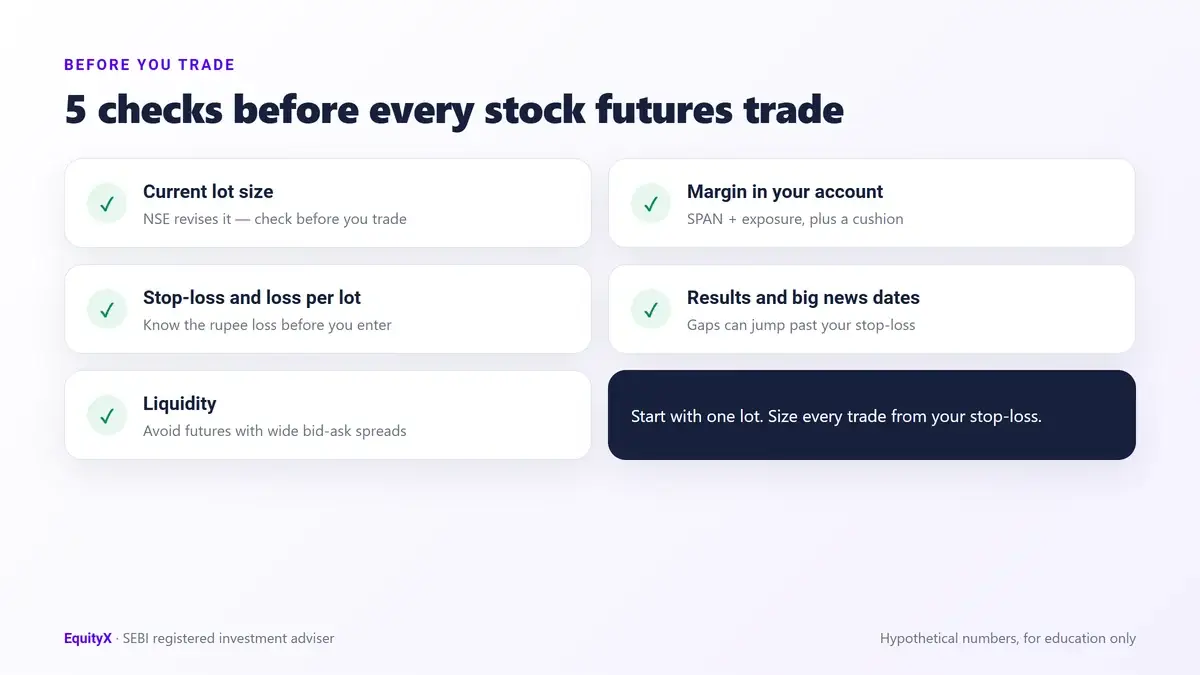
06Common mistakes with stock futures margin
?Stock futures lot size and margin: FAQs
What is the lot size in stock futures?
It is the fixed number of shares in one futures contract, set by NSE. For example, as of 19 Oct 2026 the lot size was 500 shares for Reliance Industries and 650 for HDFC Bank. Check the current list before you trade.
How much margin is needed for one lot of stock futures?
The exchange sets SPAN and exposure margin for each stock. It is a percentage of contract value, often in the range of 15% to 30% and higher for volatile stocks. Your broker shows the exact amount.
How much capital do I need to trade stock futures?
Enough to cover the margin plus a cushion for adverse moves, and a stop-loss that keeps the loss per lot within your limit. For our stock future calls we suggest about ₹3 lakh and starting with 1 lot.
Is intraday margin lower for stock futures?
Under SEBI’s peak margin rules, brokers must collect the full exchange margin upfront, so intraday positions no longer get large extra leverage.
Can I trade stock futures with ₹50,000?
Usually not safely. Most stock futures need more margin than that for one lot, and there would be no cushion for a loss.
Can stock future tips guarantee returns?
No. Stock futures use leverage, and some calls will hit the stop-loss. No SEBI registered adviser can promise returns.
This article is for education only and is not investment advice. Stock names and lot sizes are shown only to explain the concept. Investment in securities market is subject to market risks. Read all related documents carefully before investing. EquityX is a SEBI registered Investment Adviser (Reg. No. INA100011775).