
What is Theta
Which Measures the Rate of Decline in the Value of an Option Over Time, also Known as Time Decay
Theta in Options Trading: How Time Decay Works
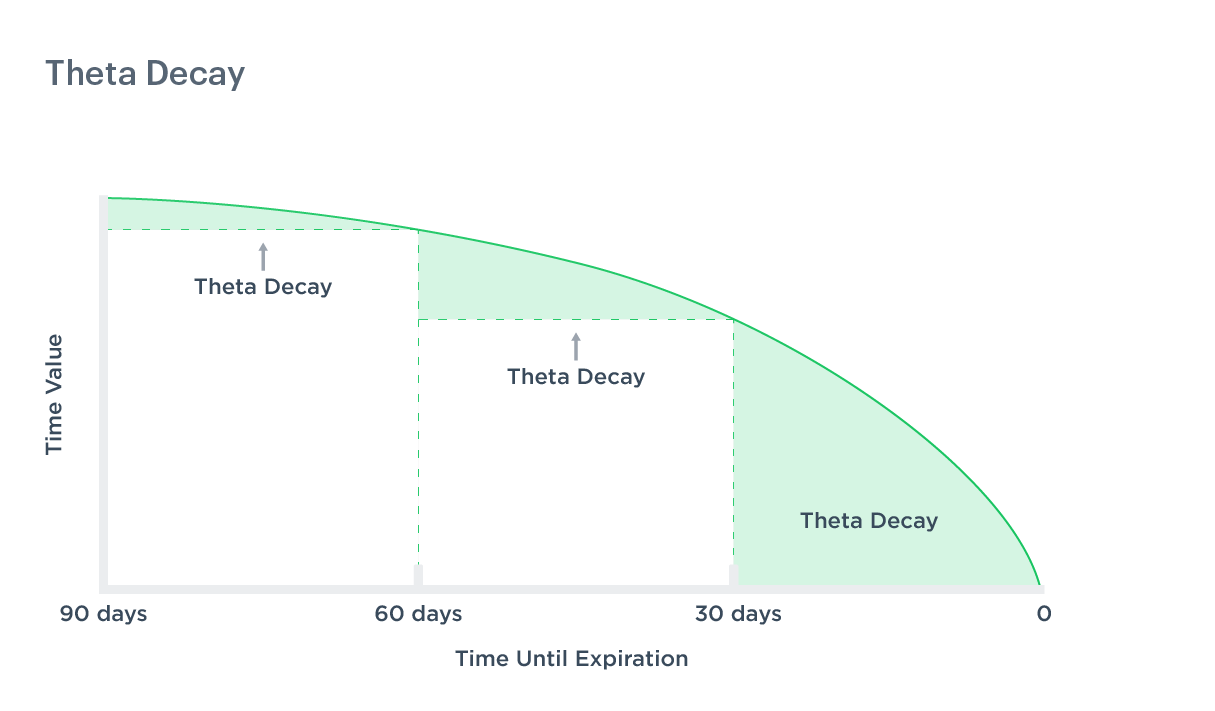
Theta measures how much an option’s value drops each day as it gets closer to expiration. This loss of value over time is called time decay. Theta is a key part of options pricing, and knowing how it works helps you trade smarter.
What Is Theta and How Does It Work?

Theta measures how much an option’s price drops as time passes, when nothing else changes. Options with more time until expiration have higher value and a higher Theta. Options close to expiration have lower value and a lower Theta.
A Simple Example of Theta
Imagine you buy a call option on a stock with a Theta of -0.03. Each day, the option loses $0.03 in value simply because time passes. If the stock price does not move, the option keeps losing value. This can lead to a loss for the buyer.
How Theta Affects Your Trading Strategy
Theta helps you choose the right strategy. Traders who sell options often look for high Theta. They want to profit as the options lose value over time. Buyers, on the other hand, need to watch Theta closely because it works against them.
Understanding theta in options trading is important because it affects every trade you make. It shapes your decisions and can change how profitable your positions are. Smart traders always consider theta when planning their trades.
When you pay attention to theta, you can make better choices and improve your trading results.
Key things to know about Theta:
Theta measures time decay. It tells you how much value an option loses each day. A Theta of -0.03 means the option drops $0.03 per day. The closer an option gets to expiration, the faster it loses value.
Theta changes based on market factors. Time to expiration is the biggest factor. Implied volatility and the strike price also play a role. Theta rises sharply in the final weeks before expiration.
Theta affects buyers and sellers differently. Option buyers lose from time decay. Option sellers gain from it. Understanding this helps you pick the right trades.
Use Theta to plan your trades. Sellers can look for options with high Theta to profit from time decay. Buyers should choose longer expiration dates to slow down the daily decay.
By understanding how theta works, you can build better trading strategies and manage risk more effectively.
Theta in Options Trading: Everything You Need to Know
Theta in options trading measures the rate at which an option's price declines as time passes, a phenomenon known as time decay. Theta is expressed as a negative number for long option positions, such as -0.05, meaning the option loses $0.05 per day if all other factors remain constant. As expiration approaches, the rate of time decay accelerates, making theta a critical factor in both buying and selling decisions.
What is theta in options trading?
Theta is one of the five main options Greeks and quantifies the sensitivity of an option's price to the passage of time. It represents the daily dollar amount an option is expected to lose as it moves one day closer to its expiration date, assuming implied volatility and the underlying asset's price remain unchanged.
How does time decay work with options?
Time decay is not linear. Options lose value slowly when they are far from expiration and lose value faster as expiration draws near. In the final 30 days before expiration, theta accelerates sharply, meaning options lose the most value during this period. This is why short-dated options are especially sensitive to time decay.
How is theta calculated in options pricing?
Theta is derived from options pricing models such as the Black-Scholes model. It is calculated as the partial derivative of the option's price with respect to time. The inputs include the underlying asset price, strike price, time to expiration, implied volatility, risk-free interest rate, and dividends. Most trading platforms display theta as a single numeric value for each option contract.
Do theta values differ for call options and put options?
Yes, theta values typically differ between call options and put options. At-the-money options tend to have the highest theta values for both calls and puts. Out-of-the-money options generally have lower theta because their time value is smaller. In most cases, at-the-money options experience the fastest rate of time decay.
- What happens to theta on expiration day?
- On expiration day, theta reaches its maximum effect. An option that is out of the money at expiration becomes worthless, and its entire remaining time value drops to zero at the close of trading.
- Is theta always negative for option buyers?
- Yes, theta is always negative for long option positions. Option buyers pay for time value, and that time value erodes each day. Option sellers, however, have positive theta because they collect premium as time passes.
- How does implied volatility affect theta?
- Higher implied volatility increases the time value of options, which in turn raises the absolute value of theta. When volatility is high, options lose value faster as expiration approaches because the premium collected or paid is larger.
- Can theta be used to find the best options to sell?
- Yes, traders who sell options often look for contracts with high theta values, especially in the 30-to-60-day expiration range. Options at this stage have significant time value remaining but are close enough to expiration that theta accelerates, maximizing premium decay for the seller.
- How does theta affect option spreads?
- In multi-leg strategies such as credit spreads and iron condors, the net theta of the overall position determines the daily time decay. Traders construct spreads so that the positive theta from short options outweighs the negative theta from long options, creating a net positive theta position that benefits from time passing.
- What is the relationship between theta and gamma?
- Theta and gamma are related through the options pricing model. A position with high gamma typically has high theta, and vice versa. This relationship is important because high gamma means the option's delta is very sensitive to price moves, while high theta means the option is losing value quickly from time decay.