
What are The Popular Option Trading Strategies such as Straddle, Strangle, Butterfly, and Iron Condor?

What Are the Most Popular Option Trading Strategies?

Familiarize yourself with the different option trading strategies.

Exploring different option strategies helps you manage risk and improve your returns. Four of the most popular are the straddle, strangle, butterfly, and iron condor. Each one works best in different market conditions. This guide explains how they work and when to use them.

Straddle Strategy: Profit from Big Price Moves in Either Direction

The Straddle Strategy

A straddle is an option trading strategy where you buy a call and a put option with the same strike price and expiration date. This lets you profit from big price moves in either direction. For example, if a stock is about to make a large move but you are not sure which way, a straddle helps you profit from that volatility.

Real Story: An investor buys a straddle on a tech stock before an earnings report. The stock surprises everyone with strong results and jumps up in price. The call option gains value, which makes up for the loss on the put option. The result is a net profit.

Strangle Strategy: A Lower-Cost Way to Play Big Moves

A strangle is like a straddle, but the call and put have different strike prices. It works well when you expect a big price move but are not sure of the direction. Since you use out-of-the-money options, a strangle usually costs less than a straddle.

Facts:

  • Strangles are popular when volatility is low and options prices are cheaper.
  • They let traders benefit from a breakout in either direction without picking a side.

Butterfly Strategy: Profit When Prices Stay Steady

The Butterfly Strategy

A butterfly strategy uses both long and short positions at three different strike prices. This creates a setup with limited risk and limited reward. It works best when you expect the price to stay steady.

Example:

// Butterfly Spread Calculation
Buy 1 ITM Call
Sell 2 ATM Calls
Buy 1 OTM Call

Iron Condor Strategy: Profit in a Range-Bound Market
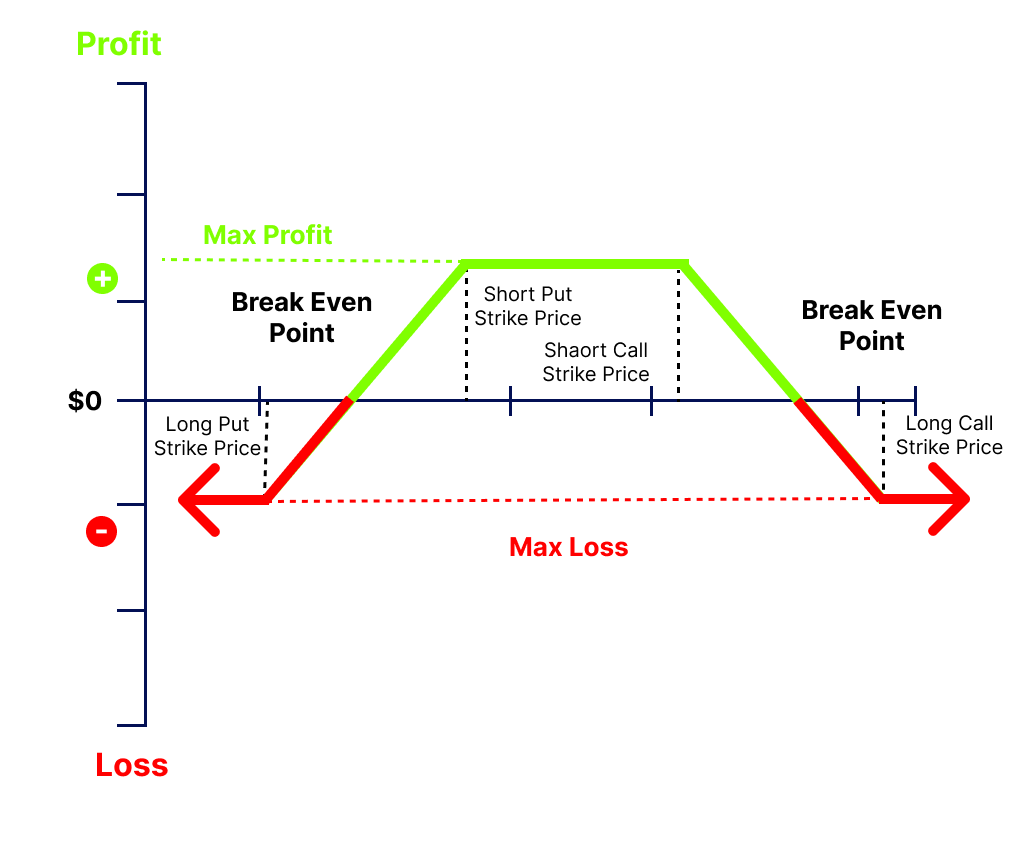
The Iron Condor Strategy

The iron condor strategy helps you profit when prices stay within a certain range. You sell an out-of-the-money put and call, and buy a put and call further out-of-the-money.

Interesting Fact: Traders often use the iron condor in neutral markets. It lets them profit when prices do not move much.

Using these option trading strategies the right way can give you an edge in the market. When you adapt your strategies to market conditions and your risk tolerance, you can trade with more confidence and manage risk better.

How to learn these strategies step by step:

  1. Master one strategy at a time.
    • Start with the straddle. It is the simplest. Learn how it works, when to use it, and what risks it carries.
  2. See how each strategy fits different markets.
    • For example, use a butterfly when you think prices will stay steady. Use a strangle when you expect a big move but are unsure of the direction.
  3. Compare the risk and reward of each strategy.
    • Note which strategies cap your losses (butterfly, iron condor) and which have higher profit potential (straddle, strangle).
  4. Study real market examples.
    • Look at charts and see how each strategy would have performed in past market conditions.
  5. Practice with a demo account before using real money.
    • Paper trading lets you test your understanding without financial risk.

Everything You Need to Know About Option Trading Strategies

Option trading strategies are predefined approaches that combine one or more options contracts to achieve a specific risk-reward outcome based on an expected market condition. The four most popular option trading strategies are the straddle, strangle, butterfly, and iron condor. Each strategy is designed for a particular market scenario — ranging from high volatility to low movement — and helps traders manage risk while seeking returns.

What is an option trading strategy?

An option trading strategy is a structured plan that uses call and put options in specific combinations to profit from a forecasted price movement, volatility change, or lack of movement in the underlying asset. Each strategy has a defined risk profile, break-even points, and maximum profit potential.

How do you choose the right option strategy based on market conditions?

You choose an option strategy by assessing whether you expect the market to move up, down, stay flat, or become more or less volatile. Use a straddle or strangle when you expect a large move in either direction. Use a butterfly or iron condor when you expect prices to stay within a narrow range.

What is the difference between a straddle and a strangle?

A straddle uses a call and put at the same strike price, while a strangle uses a call and put at different strike prices. The straddle costs more upfront but requires a smaller price move to become profitable. The strangle is cheaper to enter but needs a larger price move to reach profitability.

When should you use a butterfly spread instead of an iron condor?

Use a butterfly spread when you expect the price to land exactly near a specific target. Use an iron condor when you expect the price to stay within a broad range. The butterfly has a narrower profit zone but offers higher potential returns within that zone, while the iron condor covers a wider range with lower per-trade returns.

What are the four most popular option trading strategies?
The four most popular option trading strategies are the straddle, strangle, butterfly, and iron condor. Each one targets a different market condition, from high volatility to low movement.
Which option strategy has the lowest risk?
Butterfly and iron condor strategies have predefined maximum losses, making them lower-risk relative to straddles and strangles, which can lose the full premium paid if the price does not move.
Can you combine multiple option strategies?
Yes, advanced traders often combine multiple strategies to create custom risk profiles. For example, you can layer a butterfly on top of a directional trade to reduce cost.
What is the best option strategy for beginners?
The straddle is often the simplest for beginners because it involves only two options at the same strike price and expiration, making it easier to understand and manage.
What happens if the market moves against your strategy?
Depending on the strategy, you may lose the entire premium paid for debit strategies like straddles and strangles, or face a capped loss for credit strategies like iron condors and butterflies.
How do you practice option trading strategies without risking money?
You can use a demo or paper trading account to test option strategies in real market conditions without using real capital, which helps build experience before trading live.

Option Trading Strategies: How Straddles, Strangles, Butterflies, and Iron Condors Work

Option trading strategies are structured combinations of call and put options that traders use to profit from specific market conditions while managing risk. The four most popular option trading strategies are the straddle, strangle, butterfly, and iron condor. Each strategy is designed for a different market environment: straddles and strangles profit from large price movements in either direction, while butterflies and iron condors profit when prices stay within a defined range. These strategies are widely used because they allow traders to define their risk, set profit targets, and adapt to changing volatility conditions without predicting the exact direction of price movement.

What are option trading strategies?

Option trading strategies are predefined plans that combine multiple option positions to achieve a specific risk-reward outcome. Instead of buying a single call or put, traders combine two or more options to create a strategy suited to their market outlook. The most common strategies include the straddle, strangle, butterfly, and iron condor, each offering different levels of risk, cost, and profit potential depending on market conditions.

How do you choose the right option trading strategy?

Choosing the right option trading strategy depends on your market outlook and risk tolerance. Use a straddle or strangle when you expect a large price move but are unsure of the direction. Use a butterfly when you expect the price to stay near a specific level. Use an iron condor when you expect the price to trade within a defined range. Each strategy has a distinct risk profile, and the best choice depends on factors such as implied volatility, time to expiration, and the underlying asset's price behavior.

What is the difference between a straddle and a strangle?

A straddle involves buying a call and a put at the same strike price and expiration date, making it more expensive but requiring a smaller price move to become profitable. A strangle involves buying a call and a put at different strike prices, which costs less but requires a larger price move to reach profitability. Both strategies profit from volatility, but the strangle offers a lower-cost alternative when options premiums are high.

When should you use a butterfly instead of an iron condor?

Use a butterfly strategy when you expect the price to land at a precise target, such as the current stock price at expiration. Use an iron condor when you expect the price to stay within a broader range. The butterfly offers higher potential profit but requires more precision, while the iron condor provides a wider profit zone with a lower maximum gain. Both strategies have defined risk and are popular in low-volatility or range-bound markets.

What are option trading strategies?
Option trading strategies are structured approaches that combine multiple call and put option positions to profit from specific market conditions, such as high volatility, low volatility, or sideways price movement.
Which option trading strategy is best for beginners?
The straddle is often recommended for beginners because it uses only two options at the same strike price and expiration, making it easier to understand and manage compared to four-leg strategies like the iron condor.
What is the maximum loss on a butterfly strategy?
The maximum loss on a butterfly strategy is limited to the net premium paid to enter the trade, making it a defined-risk strategy suitable for traders who want to control their downside.
Can you lose more than your investment with an iron condor?
No, the iron condor is a defined-risk strategy where the maximum loss is capped at the difference between the strike prices minus the net credit received, so you cannot lose more than the calculated risk amount.
Do option trading strategies work in all market conditions?
No single option trading strategy works in all market conditions. Straddles and strangles work best in volatile markets, while butterflies and iron condors work best in stable or range-bound markets. The key is matching the strategy to the current market environment.
How does implied volatility affect option trading strategies?
Implied volatility directly affects option premiums and strategy profitability. High implied volatility makes straddles and strangles more expensive to enter, while low implied volatility makes butterflies and iron condors more attractive for collecting premium.
Scroll to Top