
Risk Management Strategies in Options Trading

Such as Stop-Loss Orders and Position Sizing.

Key Risk Management Strategies: Stop-Loss Orders & Position Sizing

Short term trading strategies can help lower your overall risk when used the right way. But to protect your portfolio, you need strong risk management. This guide covers stop-loss orders, position sizing, hedging, and more to help you trade smarter.

Understanding Options Risk in Trading

option risk

Options can expire worthless. When this happens, you lose the full premium you paid. Unlike stocks, options have a fixed expiration date. That is why managing risk is so important in options trading.

📈 The Greeks: Tools to Measure Risk
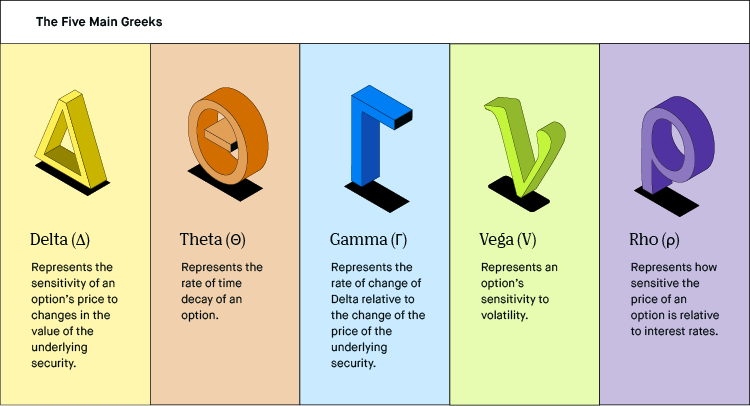
What is the Greeks

The ‘Greeks’ are tools that help you measure and manage risk in options trading.

  • Delta: Measures how much an option’s price changes when the stock price moves.
  • Gamma: Shows how fast delta changes when the stock price moves.
  • Theta: Measures how much value an option loses each day due to time passing.
  • Vega: Shows how much an option’s price changes when market volatility goes up or down.
  • Rho: Shows how sensitive an option is to changes in interest rates.

Practical Risk Management Strategies

🛑 Stop-Loss Orders

A stop-loss order is an order you place with your broker to buy or sell once the stock reaches a certain price. It helps limit your loss on a trade.

Example: You buy an option for $5. You set a stop-loss order at $3. If the option price falls to $3, the stop-loss order is triggered, and the option is sold.

⚖️ Position Sizing

Position sizing means controlling how much you risk on any single trade by adjusting the size of your position.

Example: You have a $50,000 portfolio and decide to risk 2% per trade. That's $1,000. If one option contract costs $10, you can buy up to 100 contracts.

🔒 Hedging

Hedging means taking an offsetting position to reduce the risk of bad price movements.

Example: You own a stock and buy a put option to protect against a drop in the stock's price.

📊 Diversification

Don’t put all your money into one trade or one type of asset. Spread your investments across different market sectors and asset classes. This way, a loss in one area may be balanced by gains in another.

📉 Volatility Management

Volatility can create both risk and opportunity. Strategies like straddles and strangles can help you manage volatility risk. These strategies let you profit from big price moves in either direction.

Real-Life Examples of Risk Management

The Tale of an Overconfident Trader

A trader ignored position sizing and put 50% of their capital into a single trade. The trade went wrong, and they faced a big loss. They learned the hard way not to risk too much on one trade.

The Success of the Hedger

Another trader always bought protective puts for their stock positions. When a sudden market downturn hit, others faced huge losses. But this trader’s portfolio was mostly safe. This shows the power of hedging.

Stay Disciplined

Risk management in options trading is not just a set of rules. It is a mindset. By staying disciplined and using strategies like stop-loss orders, position sizing, hedging, diversification, and volatility management, you can help protect your portfolio from big losses. Remember, managing risk is the key to long-term success in trading.


Short step-by-step plan:

  1. Understand Stop-Loss Orders:

    • Learn how stop-loss orders work. A stop-loss order tells your broker to sell an option once it hits a certain price. This helps limit your losses.
    • Example: You buy an options contract for a stock at $50. You set a stop-loss at $45. If the stock price falls to $45, the broker sells the contract to limit your loss.
  2. Explore Position Sizing:

    • Learn how position sizing works. It means deciding how much capital to risk on each trade.
    • Example: If you have a $100,000 trading account and risk 2% per trade, your position size is $2,000.
  3. Real Stories and Examples:

    • Look for real examples where stop-loss orders and position sizing helped traders reduce risk. Case studies and articles can teach you how these strategies work in practice.
  4. Save What You Learn:

    • Create a document to save your research. Include key concepts, examples, and facts about stop-loss orders and position sizing. Keep it handy so you can review it as you trade.

Options Risk Management Strategies Explained

Options risk management strategies are structured techniques that traders use to limit financial losses and protect capital when trading options contracts. The core principle is that no single trade is worth risking a portfolio's overall health. The most widely used strategies include stop-loss orders, position sizing, hedging, diversification, and volatility management. Each strategy addresses a specific type of risk, and combining them creates a more resilient trading approach.

What Is an Options Risk Management Strategy?

An options risk management strategy is a predefined rule or technique that controls how much a trader can lose on a single position or across their entire portfolio. Unlike a trading strategy that aims to generate profits, a risk management strategy focuses on preserving capital. Stop-loss orders, for example, automate the exit from a losing trade, while position sizing ensures no single loss can wipe out a significant portion of an account.

How Do Stop-Loss Orders Work in Options Trading?

A stop-loss order is an instruction placed with a broker to close a position automatically when the option's price reaches a specified level. In options trading, this is typically done by setting a stop-loss at a price below the purchase price for long positions. The order triggers a market or limit order to sell, which caps the loss on that trade at a predetermined amount. Stop-loss orders remove emotional decision-making during fast-moving markets.

What Is Position Sizing and Why Does It Matter?

Position sizing is the process of determining how many contracts or units to trade based on the amount of capital a trader is willing to risk per trade. It matters because it prevents any single losing trade from causing catastrophic damage to an account. A common rule is to risk no more than 1-2% of total trading capital on any single position. Position sizing works alongside stop-loss orders to create a complete risk management framework.

How Can Traders Combine Multiple Risk Management Strategies?

Traders combine risk management strategies by layering them. Position sizing sets the maximum dollar amount at risk per trade. Stop-loss orders define the price level at which that risk is realized. Hedging adds an additional layer by offsetting potential losses in one position with gains in another. Diversification spreads risk across uncorrelated assets. Using all these strategies together provides a safety net that protects against different types of market events.

What are the main options risk management strategies?
The main options risk management strategies include stop-loss orders, position sizing, hedging, diversification, and volatility management. Each strategy targets a different source of risk, from price movements to market volatility.
How much of my portfolio should I risk per trade?
Most professional traders risk between 1% and 2% of their total trading capital on any single trade. This ensures that a string of consecutive losses does not deplete the account.
Can stop-loss orders guarantee I will not lose money?
No, stop-loss orders cannot guarantee against losses. In fast-moving markets or during gaps, the option may be sold at a worse price than the stop-loss level. They reduce losses but do not eliminate them.
What is the difference between hedging and diversification?
Hedging uses offsetting positions, such as buying a put option against a stock you own, to directly cancel out specific risks. Diversification spreads investments across different assets so that a loss in one area may be balanced by a gain in another.
Do professional options traders always use risk management strategies?
Yes, professional options traders consistently apply risk management strategies to protect their capital. Risk management is considered as important as the trading strategy itself for long-term survival in the markets.
What happens if I trade options without risk management?
Trading options without risk management exposes the entire account to significant loss. A single trade can wipe out a large portion of capital, and without position sizing or stop-losses, losses can compound quickly.
Scroll to Top