


What Are Candlestick Charts?
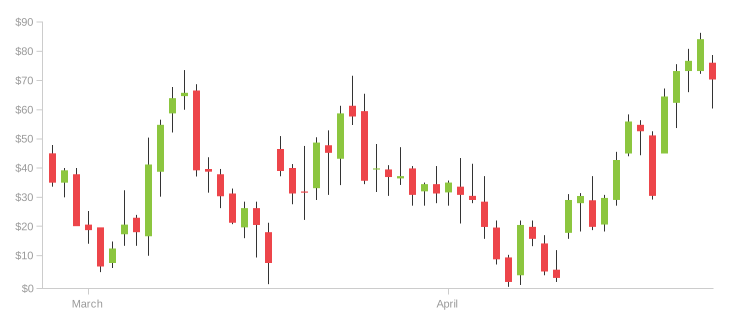
Candlestick charts show market sentiment and help predict price movements. This method was created in the 18th century by Munehisa Homma, a Japanese rice trader. Later, Steve Nison helped make it popular in Western markets. Each candlestick tells a story about buyers and sellers. Learning to read these patterns can help you make better trading decisions.
The Anatomy of a Candlestick

A candlestick is composed of three parts: the body, the wick (or shadow), and the color. The body shows the opening and closing prices, while the wicks represent the high and low prices during the candle’s timeframe. A green or white candle typically indicates a price increase, whereas a red or black candle shows a price decrease.
Example:
Green Candlestick: Opens at $50, closes at $55
Red Candlestick: Opens at $50, closes at $45
Single Candlestick Patterns

🔥 Bullish Engulfing Pattern
This pattern occurs when a small red candle is followed by a larger green candle that completely engulfs the body of the previous day’s candle. It suggests a potential bullish reversal.
❄️ Bearish Engulfing Pattern
The opposite of the bullish pattern, a small green candle is followed by a larger red candle. It indicates a possible bearish reversal.
🌟 Doji
A Doji is when the opening and closing prices are virtually equal, resulting in a cross-like candle. It signifies market indecision.
🚀 Hammer and Inverted Hammer
A hammer has a small body at the top and a long lower wick, signaling a potential bullish reversal. The inverted hammer looks similar but is found at the bottom of a downtrend and also suggests a bullish reversal.
💣 Shooting Star and Hanging Man
The shooting star appears after an uptrend, with a small body at the bottom and a long upper wick, hinting at a bearish reversal. The hanging man is identical in appearance but forms during a downtrend, indicating further bearish momentum.
Multiple Candlestick Patterns
🌉 Bullish and Bearish Harami
A large candle followed by a smaller candle that is contained within the previous body. A bullish harami occurs in a downtrend, while a bearish harami appears during an uptrend.
🌓 Dark Cloud Cover and Piercing Line
Dark cloud cover is a bearish reversal pattern where a red candle opens above the close of the previous green candle but closes well into its body. The piercing line is the bullish counterpart.
🔗 Morning Star and Evening Star
A three-candle pattern with a small body sandwiched between a long candle and a candle of the opposite color. The morning star is bullish, and the evening star is bearish.
How to Use Candlestick Patterns for Trading

Candlestick patterns work best when used with other tools. Try combining them with trend lines, trading volume, and technical indicators. Also think about the overall market conditions and the asset you are trading.
Real Story: The Reversal of Apple Inc.
In early 2019, Apple Inc. (AAPL) showed a bullish engulfing pattern after a period of decline, signaling a potential reversal. Traders who recognized this pattern and combined it with other indicators could have taken advantage of the subsequent uptrend.
Candlestick patterns help traders understand market sentiment and spot possible price movements. When you learn to recognize these patterns and use them with other analysis methods, you can make smarter trading decisions. No single pattern guarantees a certain outcome. But used with other tools, they can give you a helpful edge.
Short step-by-step plan:
Learn the basic candlestick patterns: Start by learning about types of candlestick patterns such as Doji, Hammer, Shooting Star, and Engulfing pattern. For example, a Doji shows market indecision and can signal a possible reversal.
Know what each pattern means: Go deeper into each pattern’s meaning. A Hammer pattern after a downtrend can signal a bullish reversal. The long lower wick shows buyers are stepping in.
Read market sentiment: Learn how each pattern shows what traders are feeling. A long green body in an uptrend means strong buying and bullish sentiment.
Study real chart examples: Look at past price charts and find times when candlestick patterns predicted price moves. For example, see how an Engulfing pattern came before a big price reversal in a stock or crypto asset.
Save useful resources: Create a folder or document with reliable sources, articles, and chart examples of candlestick patterns. This will help you study and refer back later.