Option Greeks

What is Different Option Greeks and How They Influence Options Pricing and Trading Strategies

What Are Option Greeks?
Option Greeks explained for trading

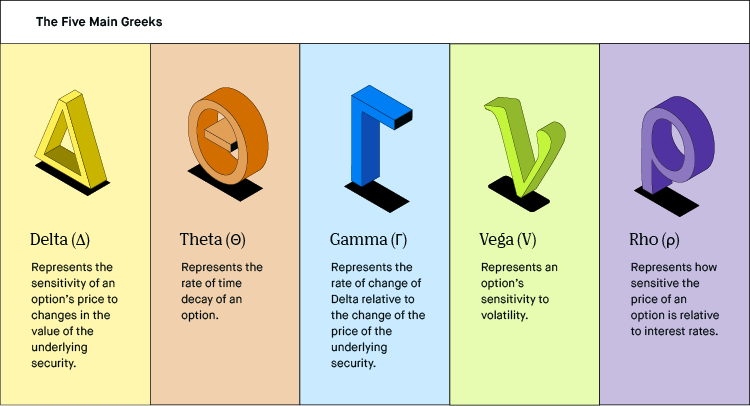
Options trading is about more than just buying and selling. You also need to understand the key factors that drive an option’s price. These factors are called the “Greeks”, and they help you build smarter trading strategies.

📈 Delta: The Rate of Change

Delta measures how much an option’s price may change when the underlying asset moves by one point. For example, a delta of 0.5 means the option’s price will change by 0.5 for every 1-point move in the stock or index.

Example: If BankNifty moves from 35000 to 35001, and the option delta is 0.5, the option price will increase by 0.5.\n

🕒 Theta: Time’s Impact on Value

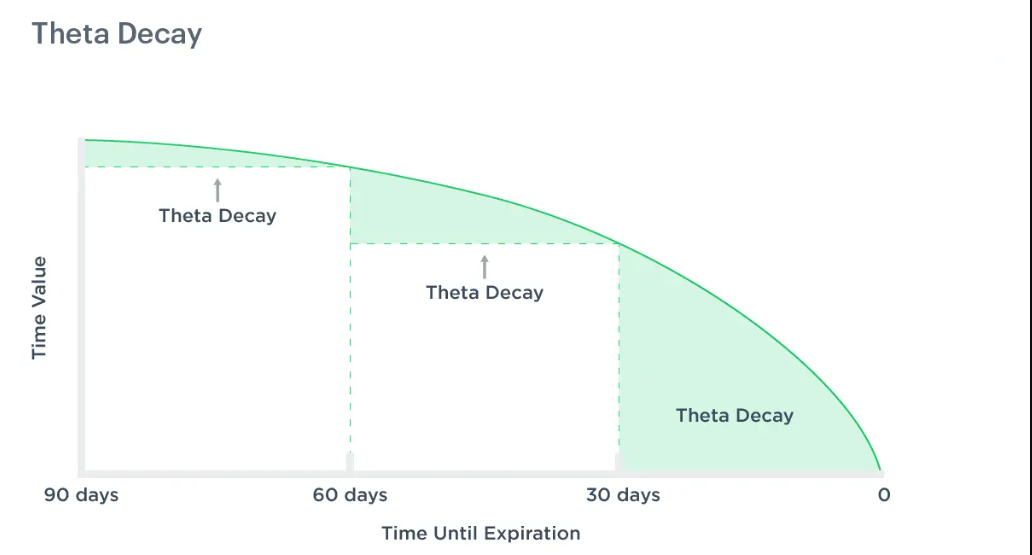
Theta measures how much value an option loses each day as time passes. This is called time decay. Options lose value the closer they get to their expiration date.

Example: If an option has a theta of -0.03, its price will decrease by 0.03 every day, all else being equal.\n

🔍 Vega: Sensitivity to Volatility

Vega measures how much an option’s price changes when market volatility shifts. A higher Vega means the option’s price is more sensitive to changes in volatility.

Example: If the implied volatility increases by 1%, an option with a vega of 0.10 will increase in price by 0.10.\n

🏛️ Rho: Interest Rates’ Influence

Rho assesses the impact of interest rate changes on an option’s price. It’s less commonly used but important for long-term options.

Example: If interest rates rise by 1%, an option with a rho of 0.05 will increase by 0.05 in price.\n

🔄 Gamma: The Rate of Delta Change

Gamma measures how fast Delta changes when the underlying asset price moves. It tells you the acceleration of an option’s price change.

Example: If gamma is 0.10 and delta is 0.5, and the underlying stock moves by 1 point, the new delta would be 0.6.\n

How to Use Greeks in Your Trading Strategy

The Greeks help you create smarter options trading strategies. For example, a high Theta value means holding an option near expiration may lose value quickly. A high Vega can help you trade based on expected market volatility.

Balancing Delta for Hedging

Balancing Delta for Hedging

By balancing Delta, traders can hedge their positions to reduce risk. A Delta-neutral strategy aims to have the total Delta of a portfolio equal to zero.

Profiting from Theta Decay
Theta Decay in Time-Sensitive Strategies

Selling options lets you benefit from theta decay. As time passes, options lose value, which works in the seller’s favor. Learn more about theta decay and time erosion.

Using Vega to Trade on Volatility Changes

Traders may buy options with a high Vega when they expect volatility to rise. They may sell options when they expect volatility to fall.

Using Gamma to Adjust Your Trades

A high Gamma position needs more frequent adjustments to stay delta-neutral. This can affect your trading costs and potential profits.

Master the Greeks for Smarter Options Trading

The Greeks give you a clear way to understand options pricing and risk. By learning these metrics, you can predict price movements and build strategies that match the market. Whether you trade BankNifty options or other instruments, the Greeks are valuable tools for every options trader.

Using Option Greeks in Trading Strategies

Option Greeks trading strategies use Delta, Gamma, Theta, Vega, and Rho to measure an option's sensitivity to different market factors and build informed trading decisions. These metrics help traders predict how an option's price will change when the underlying asset price, time to expiration, implied volatility, or interest rates move.

An option Greek is a mathematical measure that quantifies the risk exposure of an options position to a specific variable. Traders apply these Greeks to hedge positions, select the right strike prices, and choose optimal expiration dates for their strategies.

How do you use Delta in an options trading strategy?

Delta measures the rate of change between an option's price and a one-point move in the underlying asset. Traders use Delta to estimate directional exposure, calculate position size relative to the underlying, and build Delta-neutral strategies where the total Delta of a portfolio is zero.

What is a Theta-based trading strategy?

A Theta-based strategy involves selling options to profit from time decay. Since options lose value each day as expiration approaches, option sellers benefit from Theta erosion. Common Theta-focused strategies include selling out-of-the-money call and put options.

How do traders use Vega in options strategies?

Traders use Vega to take positions based on expected changes in implied volatility. Buying options with high Vega works well when volatility is expected to rise, while selling options with high Vega suits periods when volatility is expected to decline.

What are option Greeks trading strategies?
Option Greeks trading strategies use Delta, Gamma, Theta, Vega, and Rho to manage risk and predict price changes in options positions based on movements in the underlying asset, time decay, volatility, and interest rates.
Which option Greek is most important for beginners?
Delta is the most accessible Greek for beginners because it directly shows how an option's price moves relative to the underlying asset, making it easier to understand directional risk.
What is a Delta-neutral strategy?
A Delta-neutral strategy balances long and short options positions so that the total Delta of the portfolio is zero, making the position less sensitive to small price movements in the underlying asset.
How does Gamma affect trading adjustments?
Gamma measures how fast Delta changes when the underlying price moves. A high Gamma position requires more frequent adjustments to stay Delta-neutral, which increases trading costs but also offers greater profit potential during sharp price moves.
Can you combine multiple Greeks in one strategy?
Yes, advanced traders combine Greeks by setting targets for Delta, Gamma, Theta, and Vega simultaneously, creating strategies such as iron condors or calendar spreads that benefit from multiple market conditions.
Why is Vega important during earnings season?
Vega is important during earnings season because implied volatility tends to rise before earnings announcements. Traders monitor Vega to decide whether to buy options to capture volatility expansion or sell options to profit from the post-earnings volatility crush.
Scroll to Top