


What is the buyback of shares?
Buyback means that a company repurchases its shares it's called a buyback. It is also known as the buyback of shares and stock buyback. After repurchasing shares company should cancel this because a company can't buy its own shares for the purpose of investment.
Reasons For Buyback Of Shares
When a company sells its share so why do they want to repurchase, so for this there are many reasons for share buyback.
Undervalued Shares
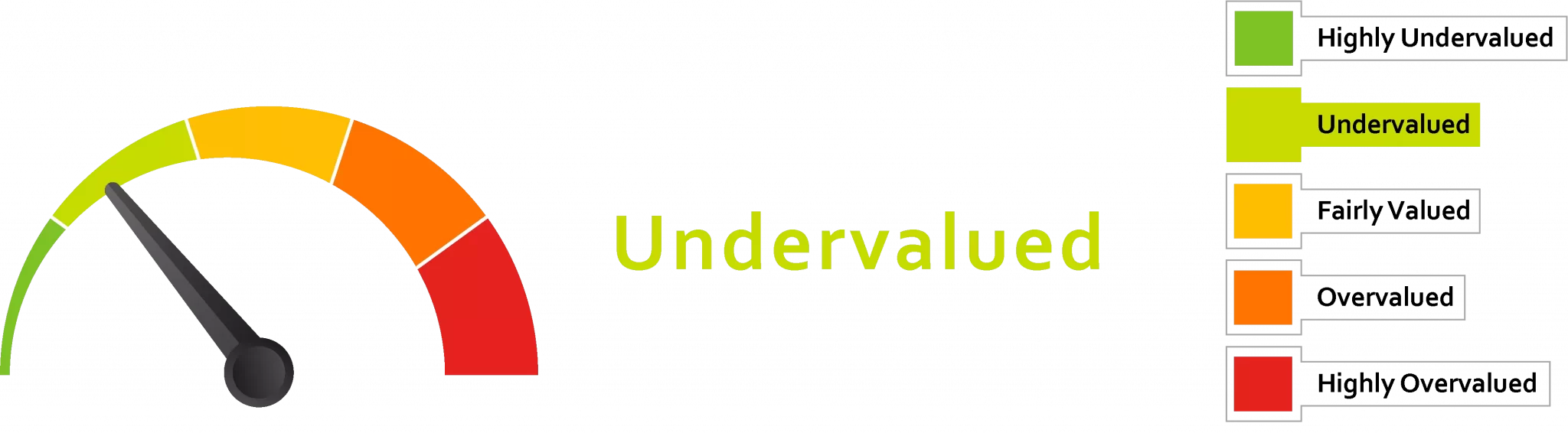
This is the main reason to repurchase shares when a company sees that its company shares are undervalued, so that company buys its own shares. Because of this company shares reduce in the market and price rises day by day.

Lots Of Cash But Not Many Products Opportunities
This is the second main reason for buyback of shares, that company has lots of cash or cash in the bank account is very expensive so for this company repurchase its own shares, and use its cash to give rewards of its shareholder.
Improve Valuation Of Companies
Buyback and repurchase improve company EPS and ROE. when EPS goes up, the stock price is also going up. So that why a company buyback its share because of this stocks and share reduce in the market and values of the shares goes up.

4. A company can buy back no more than 25% of its paid-up equity capital in any financial year.
5. Debt-equity ratio should not fall below 2:1 after buy-back.
6. The shares and the specified securities should be fully paid up.
7. Company must follow the SEBI guidelines in case of listed shares and prescribed
guidelines in the case of others.
8. Only one buy-back in a year is allowed.
9. Shares must be physically destroyed within 7 days of completion of buy-back.
10. No fresh issue is allowed within 6 months from buy-back, except by way of issue of
bonus shares, ESOPs, sweat equity, and conversion of debt/preference shares into equity.
SEBI GUIDELINES FOR BUYBACK
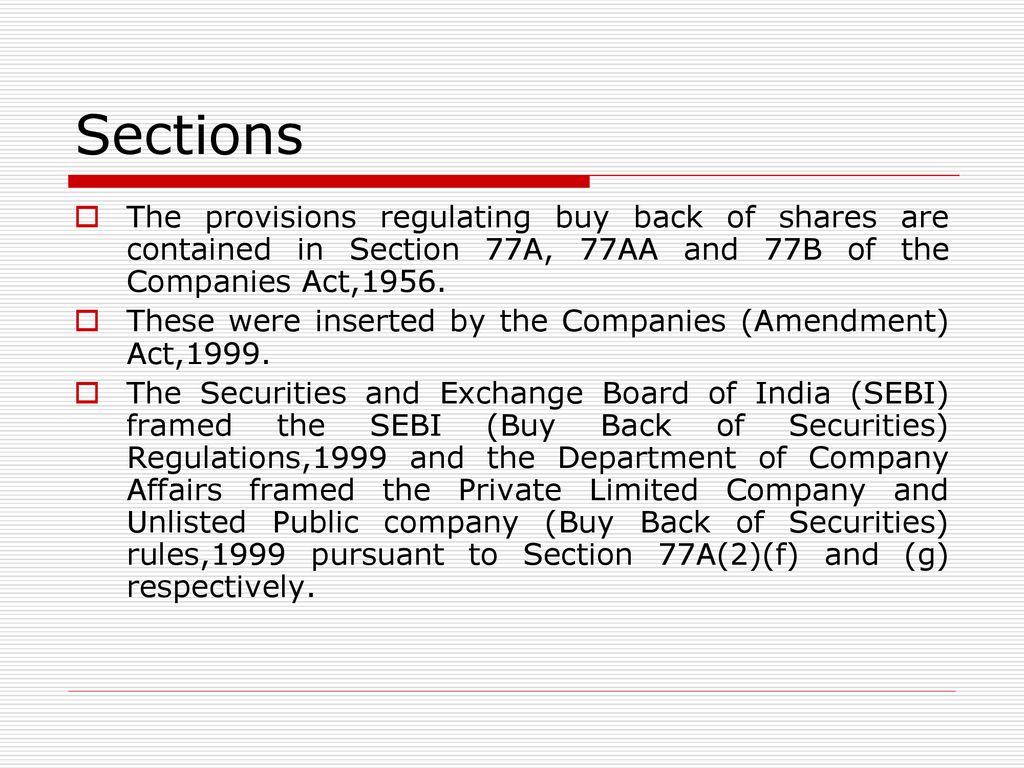
Buyback of shares in India is a relatively new concept that has started to gain popularity in recent years. The buyback of shares is regulated by SEBI (Buyback of Securities) Regulations 1998, which lays out the guidelines for the buyback process. These regulations were recently replaced by SEBI (Buyback of Securities) Regulations, 2018.
In this article, we will discuss the meaning of buyback of shares, reasons for buybacks, methods of buybacks, benefits of buybacks, and more.
1. Buyback of shares must be authorized by its articles
2. A special resolution passed at a general meeting is needed to authorize buy-back. However,
The board of directors may authorize the company to buy back up to 10% of the total paid-up equity capital and free reserves (only one such buy-back can be done in a year) by passing a resolution at its meeting.
3. The maximum amount of buy-back should not exceed 25% of the company's total paid-up capital and free reserves.


ADVANTAGES OF SHARE BUYBACK
- Repurchase increases the share value in the market.
- The company gives a return of surplus of shares to shareholders.
- Shares buyback improves company earning per value, return on equity, and price earning ratio, etc.
- It helps the company to unfriendly takeovers from other companies.
- Because of repurchase company utilize its sum of the free reserve.
- share buyback helps the company to tax savings.
DISADVANTAGES OF BUYBACK
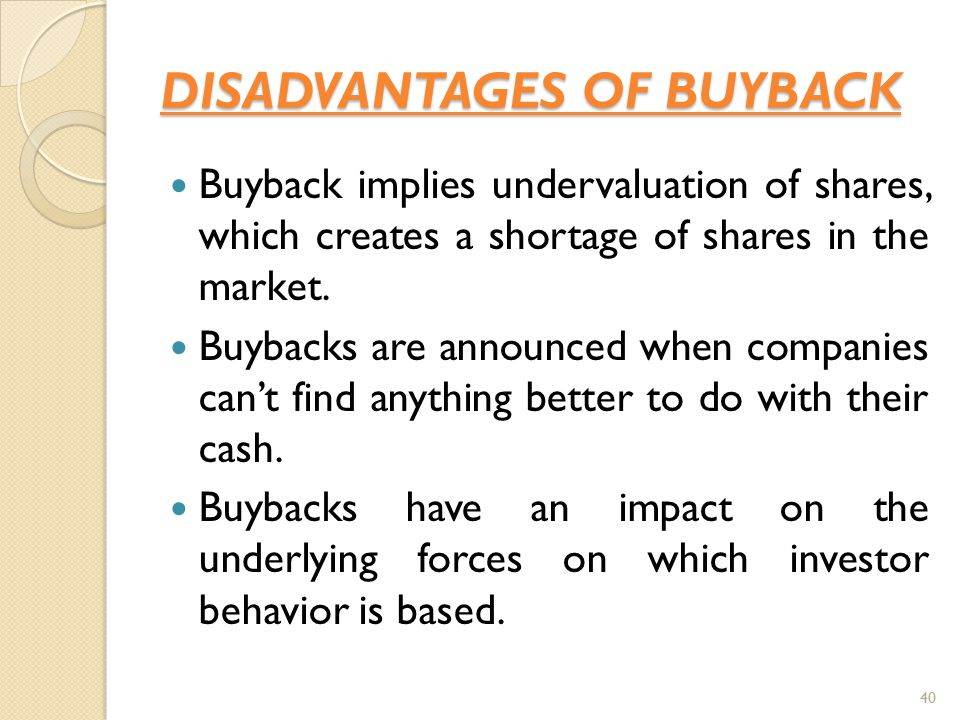
- Sometimes share buyback puts companies at a risk.
- It might disadvantage when the company pays too much for its own shares.
- Sometimes buyback gives negative signals to investors.
- buyback reduces cash surplus with the company.
- After this, for further expansion no scope.
- Many times shareholders do not like buyback or repurchase.
METHOD OF BUYBACK
There are three main methods of buy back shares.

BUYBACK THROUGH OPEN MARKET

BUYBACK THROUGH TENDER OFFER

ODD-LOT HOLDERS
IMPACT OF SHARE BUYBACK
- Share buyback generally has positive impacts on a company’s finances and other things.
- Because of buyback share prices increase.
- The total number of shares outstanding reduces in the market and the earnings per share increase with the buyback of shares.
- The buyback also positive impact on investors’ portfolios.
- Because of buyback, the company’s key financial ratio also improves.

Free Registration for Stock Market Tips ( Advisory Services)


As per the SEBI rules, we will provide our Services only to those clients who have Complete Risk Profile. Fill This Registration Form and
Contact us on
- Whatsapp @ +91 95999 69624
- Call Us @ +91 82 7799 7560
for further process.
Risk Profiling is COMPULSORY
Stock Market Analysis and Predictions for 2025 Current Market Conditions The stock market is very volatile right now, causing worry among …
Popcorn Tax: Effects the Indian Economy The government of India has recently made the decision to increase the Goods and Services Tax …
Summary of India’s GDP Data Key Data Release An important GDP data release was scheduled post-market closure on November 29. This data …
Nifty Stock Market Analysis by EquityX 25-11-2024 Final Closing Details Nifty Closing Level: 23970 Friday’s Closing Gain: Nifty surged by 557 points. …
The Impact of Liquidity on Intraday Trading Strategies for Maximizing Returns Intraday trading, also known as day trading, involves buying and selling …
Mastering Intraday Equity Trading Top 10 Intraday Trading Tips for Success Intraday equity trading can be an exciting and profitable venture, but …
Strategies for Successful Intraday Equity Trading Intraday trading in the fast-paced world of equity markets can be both thrilling and challenging. With …
The Art of Using Stop-Loss Orders in Intraday Equity Trading Intraday equity trading can be a thrilling and potentially lucrative venture for …
Important Tools for Analyzing Intraday Equity Markets Intraday trading in equity markets can be thrilling and profitable, but it also requires a …
Share Market Tips For Beginners The share market, also known as the stock market, is a crucial component of the global financial …
What Are Macroeconomic And Market-Specific Risks Macro and Market Risks Macroeconomic and market-specific risks can significantly impact the financial performance of businesses …
What Are Risk Management Strategies In Stock Portfolio Risk Management Strategies: In the context of stock portfolio management, risk management refers to the process …
What Are Financial And Business Risks In Stock Investments Interesting Fact: financial and business risks are inherent in stock investments, and understanding …
Risk Assessment Not All Risks Are Equal? When it comes to investing in the Indian stock market, understanding and assessing risk is …
What Are Regulatory And Geopolitical Factors Influencing Stock Investments Regulatory Factors in Stock Investments Regulatory factors play a crucial role in influencing …
What Are Industry Trends And Competitive Positioning Of Companies Industry Trends and Competitive Positioning Analyzing industry trends and competitive positioning is crucial …
Assessing Management Quality And Corporate Governance Practices Interesting Fact: The quality of management and corporate governance practices can significantly impact a company’s …
Qualitative Analysis Companies Have Personalities? Just like people, every company has its own personality, which can be understood through Qualitative Analysis. This type …
What Is Price-To-Book (P/B) Ratio And How It Can Help In Evaluating Stock The Price-to-Book (P/B) Ratio The P/B ratio is a …
The Price-To-Earnings (P/E) Ratio And Its Significance In Stock The price-to-earnings (P/E) ratio and its significance in stock analysis The P/E ratio …
Discounted Cash Flow (DCF) Analysis And Its Application In Stock Valuation Discounted Cash Flow (DCF) Analysis Discounted Cash Flow (DCF) analysis is …
Valuation Techniques True Worth of a Company? Valuing a company is both an art and a science. Investors around the world use …
What are Undervalued And Overvalued Stocks Based On Fundamental Analysis Fundamental Analysis fundamental analysis is a method used to evaluate the intrinsic …
What are Economic Indicators And Their Impact On Stock Prices The stock market is influenced by a wide range of economic indicators? …
Financial Statement Analysis: Balance Sheet, Income Statement, And Cash Flow The balance sheet, income statement, and cash flow statement are the three …
Technical Analysis Indicators To Make Informed Investment Decisions Technical Analysis Indicators Technical analysis indicators are mathematical calculations based on historical price, volume, …
Technical Analysis Tools For Short-Term Stock Market Investment 📈 Candlestick Patterns Candlestick patterns are a crucial part of technical analysis. These patterns provide …
Technical Analysis For Short Term Trading Charts Can Tell Stories? Investing in the stock market is not just about picking stocks at …
What Are The Impact Of Market Trends On Stock Selection Market Trends and Their Impact on Stock Selection Market trends can significantly …